
Educator Corner
Practical resources for GP educators: trainers, supervisors and teaching programmes
Ready-to-use resources for GP educators supporting trainees through supervision, WPBA, AKT preparation, consultation skills and group teaching.
Use this page to find tutorial cases, educator guides, seasonal teaching support and ready-to-deliver half-day release sessions.
Includes supervision tools, ePortfolio and WPBA support, AKT teaching resources, communication skills cases, and monthly teaching plans.
Support for GP trainers and educational supervisors, including supervision tools, placement logistics, induction, timetable and reasonable adjustment resources, ARCP preparation, WPBA guidance, communication skills support and exam resources.
Monthly consultation cases for tutorials, role-play and small-group teaching, supporting clinical reasoning, communication skills, patient-centred care and safe management planning.
New cases are added each month.
Incoming Trainees & New Placements: Resources to support safe induction, placement planning, LTFT timetables, reasonable adjustments and inclusive starts for trainees joining or changing posts.
Induction Toolkit for GP Training: A structured toolkit covering welcome, key contacts, escalation, educational time, induction timelines, expectations, supervision, leave and local practice add-ons.
LTFT Timetable Examples: Editable timetable examples to support placement planning for less-than-full-time trainees.
Reasonable Adjustments Toolkit: Practical support for early conversations, planning and documentation around trainee adjustments.
Supporting Neurodivergent Trainees: Guidance and signposting for supporting trainees with autism, ADHD and dyslexia in GP training
Ready-to-use teaching sessions for GP educators, including Hot Topics, Clinical Conundrums, communication skills sessions and larger group teaching resources for tutorials, half-day release and small-group teaching.
Seasonal Focus: Starting the Training Year Well
〜
Seasonal Focus: Starting the Training Year Well 〜
Teaching Programme: Resources to support initial teaching sessions and support TPD’s and PCME’s planning for the academic year ahead
Teaching Programme Template: A flexible, fully populated teaching programme for 2026–27, with session ideas for ST1, ST2 and ST3, providing educators with a practical structure to adapt locally.
New Starter Induction: A warm, interactive ST1 induction session helping new trainees build connections, explore hopes and worries, understand the training journey, identify support and approach the ePortfolio confidently.
Making your first post count: An interactive ST1 workshop helping trainees use placements, supervision and the ePortfolio deliberately, recognise GP-relevant learning and WPBA opportunities, and plan meaningful early actions.
GP Fluency delivered sessions: GP Fluency can deliver selected sessions for your trainee group—click here to explore available topics and discuss local delivery.
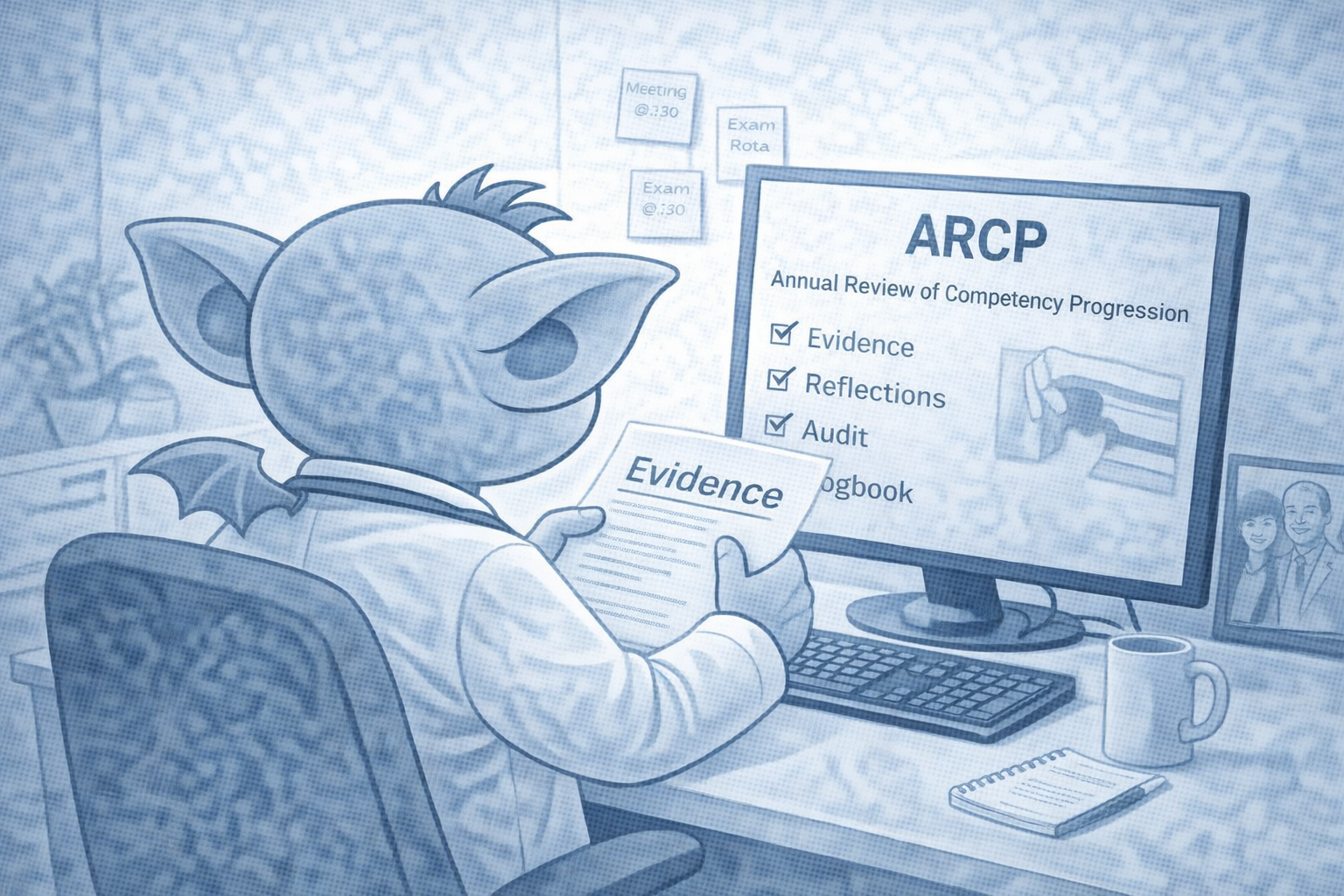
Trainer, ES and CS Resources
Practical resources for GP trainers, educational supervisors and clinical supervisors, supporting induction, supervision, WPBA, ePortfolio evidence, ARCP preparation, reasonable adjustments, consultation skills and exam support.
Some resources are educator-facing; others are trainee-facing tools that can be signposted during supervision, tutorials or placement planning.
Placement planning, Induction & ST3 transition to CCT
Induction toolkit - recently added
CCT preparation (trainee facing)
CCT to do list: First5/Next 5 (trainee facing)
Reasonable adjustments and inclusive training
Supporting trainees with neurodiversity - recently added
Supporting trainees with autism - recently added
Supporting trainees with ADHD - recently added
Supporting trainees with dyslexia - recently added
Supervision
Tutorials
Starting ST3: Planning first 12 weeks -Tutorial Plan & Trainee preparation
Making extension time count - Tutorial Plan & Trainee preparation
ST3 Frailty tutorial - Tutorial Plan & Trainee preparation - recently added
ST1 Minor illnesses tutorial - Tutorial Plan & Trainee preparation - recently added
Summer Bonus Resource: Planning Your GP Teaching Programme
A downloadable template teaching programme for 2026–27, designed to help GP educators, TPDs and teaching teams think through the shape of the training year.
The template includes example teaching topics across ST1, ST2 & ST3, with space to adapt sessions to your local curriculum priorities, trainee needs, educator availability & programme structure.
Use it as a starting point, planning prompt or source of inspiration when curating your own teaching programme for the year ahead.
WPBA
Learning with COTs (trainee facing)
CEPs without the panic (trainee facing)
ePortfolio
Learning Log Entries - What goes where - recently added
ARCP
ARCP preparation - recently updated
Communication skills support
Find the IMP- eliciting and understanding the psychosocial context by exploring impact. meaning and patient priorities
Eliciting and checking patient understanding (trainee facing)
Managing, Sharing and Explaining Uncertainty (trainee facing) - recently added
Let’s talk about series (trainee facing) - recently updated
Communication skills resources (trainee or educator facing) -recently updated
AKT and Exam Support
AKT Preparation - an applied approach for GP trainees (trainee facing)
Cranial Nerves (trainee facing) - recently added
NHS structure and roles (trainee facing)
Statistics monthly focus (trainee facing) - recently updated
Statistics for the AKT: Interpretation for clinical practice (study day for trainees)

Communication Skills Cases for Tutorials
Ready-to-use consultation cases for GP trainers and educational supervisors. Each case is designed for tutorial discussion, role-play or small-group teaching, with a focus on clinical reasoning, communication, patient priorities and safe management.
Some cases are written for one-to-one ES tutorials; others can be adapted for group teaching or SCA-style practice.
September’s Cases:
This month’s ES tutorial cases explore communication when urgent sclinical or safeguarding risk sits alongside patient autonomy, confidentiality and deeply personal priorities.
Trainees will practise supporting a 17-year-old requesting termination of pregnancy where confidentiality, competence and a position-of-trust safeguarding concern must be handled carefully, and a palliative patient with new severe back pain and neurological symptoms who is frightened that urgent hospital assessment will undermine his wish to remain at home.
Both cases require careful balance: respecting autonomy without ignoring vulnerability or risk, explaining the limits of confidentiality and choice transparently, recognising urgent danger without becoming coercive, and creating a clear, compassionate plan that protects safety while preserving trust.
Recent Tutorial Cases
Browse recent cases from the last few months
Teaching Sessions
Ready-to-use teaching resources for GP educators, designed for use in weekly cohort teaching programmes.
They can be adapted for the learning needs of your teaching groups as well as used in tutorials or small-group discussion.
Hot Topics
Current or evolving areas of GP Practice, presented as practical, relevant teaching for GP trainees
September
A case-led Hot Topic exploring the shift from PCOS to PMOS, with practical primary-care approaches to recognition, assessment, annual review and fertility conversations.
Communication Skills
Cases exploring complex communication where clinical urgency, ethical judgement and patient autonomy all need to be held together.
Trainees will practise staying calm, clear and compassionate.
The cases require careful balance: being honest without overwhelming, recognising urgent risk without becoming coercive, respecting patient choice without ignoring vulnerability, and creating clear, practical plans that protect safety while preserving trust.
September
Teaching Sessions
Resources to deliver a half day teaching session, with broad RCGP curriculum and capability coverage
September:
Managing Uncertainty in Primary care
This interactive ST3 teaching session explores how GPs manage uncertainty safely and proportionately. Using realistic cases, it focuses on clinical reasoning, purposeful use of time and investigations, safety-netting, shared decisions and patient context through ICE and IMP.
Clinical Conundrums
Very short cased based discussion starters to explore uncertainty, clinical reasoning and safe decision making
September’s Conundrums
Planning the Teaching Programme?
As summer is often when teaching teams start shaping the year ahead, we’re sharing our free template teaching programme for 2026–27 as a time-limited planning support for GP educators.
The template includes example ST1, ST2 and ST3 teaching sessions to help educators think through curriculum coverage, trainee needs and the overall shape of the training year.
Use it as inspiration, structure or a starting point for your own local teaching plan.
Browse Recent Teaching Resources
The Teaching Library brings together recent GP Fluency teaching sessions from the last few months, including Hot Topics, Clinical Conundrums, communication skills cases and wider curriculum teaching.
It is updated and refreshed regularly with practical resources to support you and your trainees, particularly in half-day release and small-group teaching.
Case Packs & Commissioned Teaching
Alongside the free educator resources on this page, GP Fluency also offers downloadable case packs for GP trainers, educational supervisors and teaching programmes.
These packs are designed for structured role-play, tutorial discussion, SCA-style practice and communication skills teaching, with educator guidance and feedback prompts included.
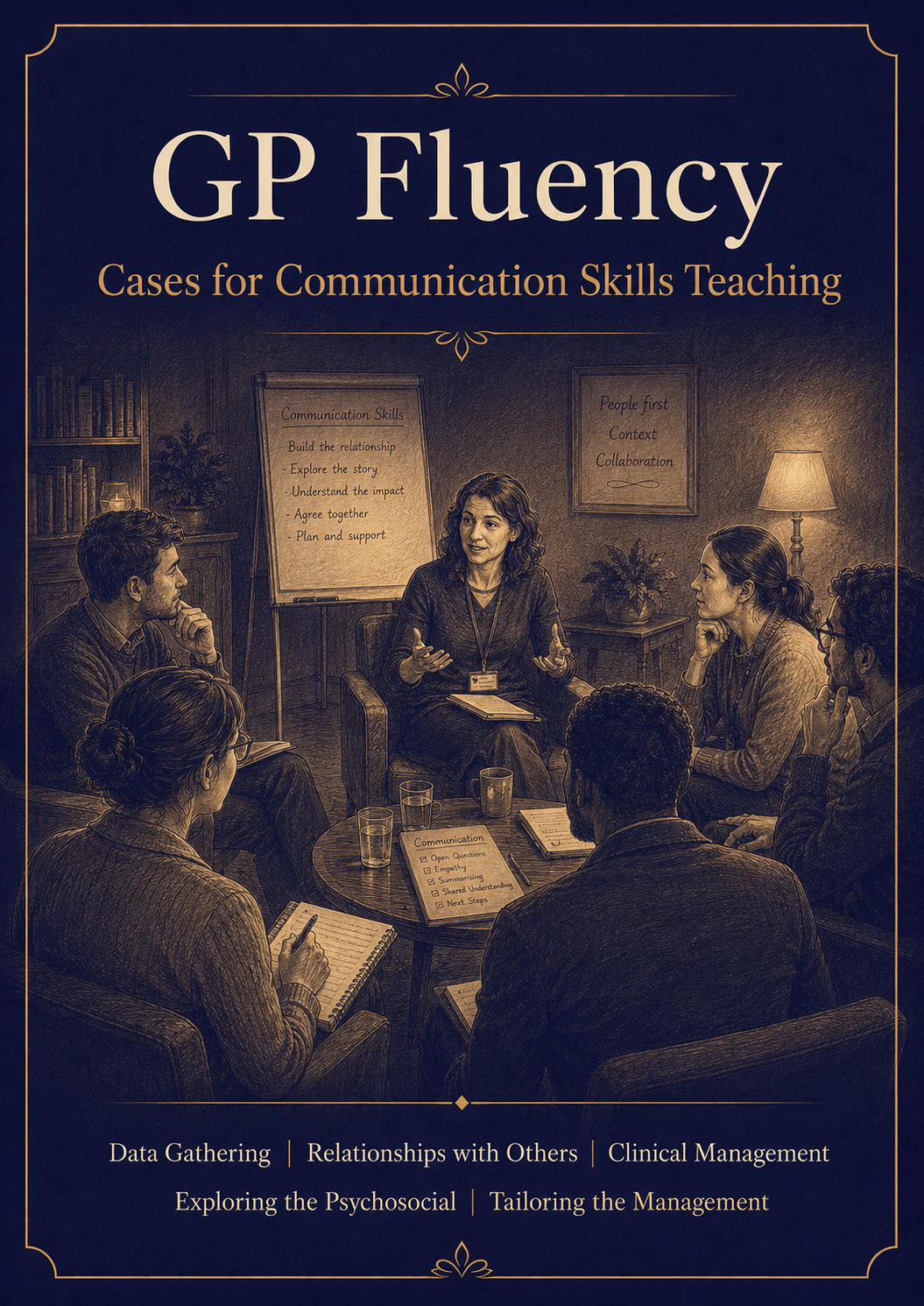
Four ready-to-use clinical communication cases for GP trainees, designed for role-play, tutorial discussion and structured feedback.
These cases are on the more complex side, where the diagnosis is only part of the task. Trainees practise explaining uncertainty, responding to emotion, exploring patient priorities and building safe, shared management plans.
Each case includes candidate information, patient/actor briefing, clinical management considerations, educator notes and feedback guidance mapped to the RCGP SCA domains.
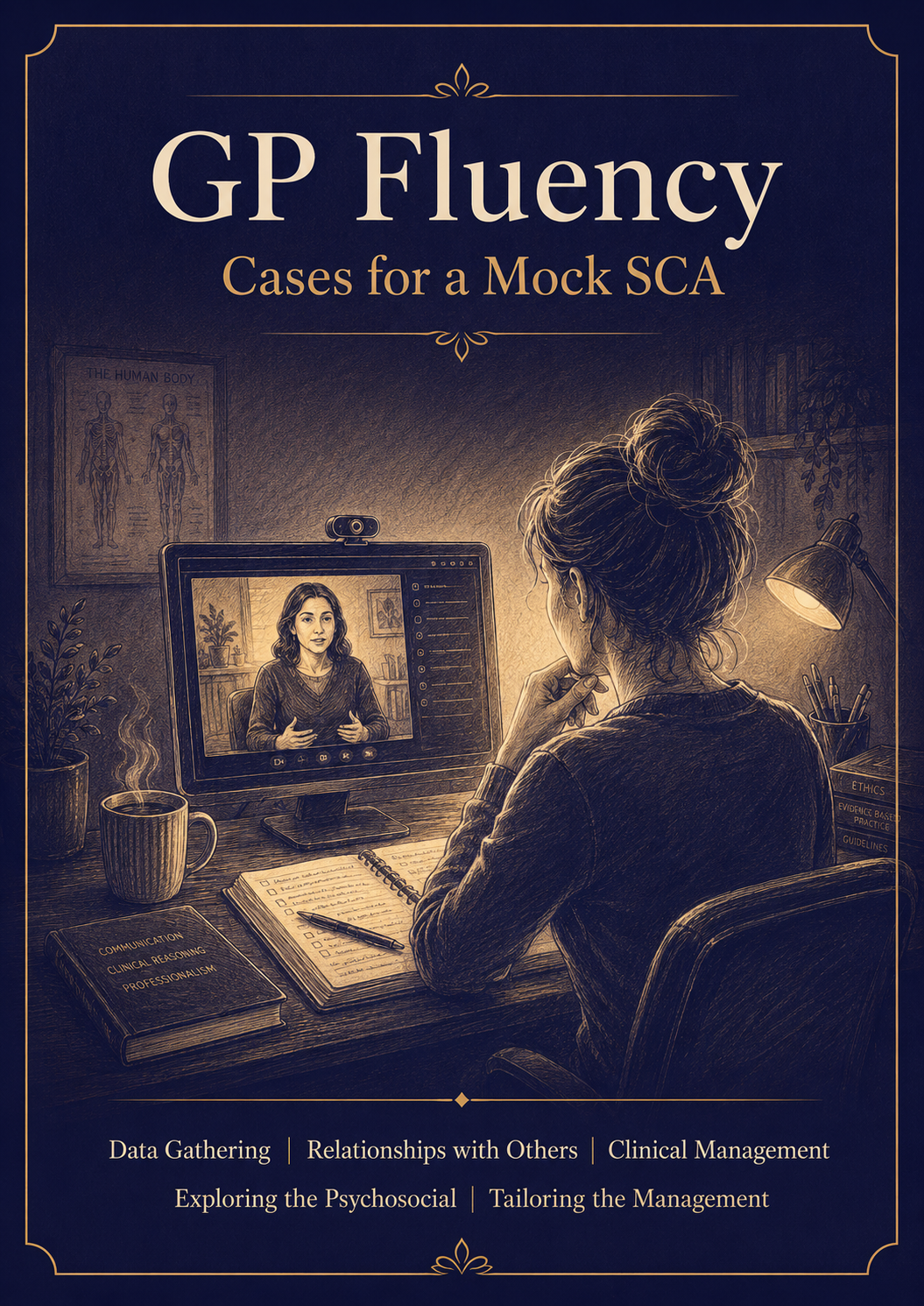
Six realistic mock SCA-style cases for GP trainees, designed for structured role-play, timed practice and feedback across a varied range of primary care consultations.
Each case includes candidate information, patient/actor briefing, clinical management considerations, educator notes and feedback guidance mapped to the RCGP SCA domains.
Bespoke Case Packs
GP Fluency can also curate bespoke case packs tailored to your programme’s needs. These can be built around specific curriculum areas, consultation skills themes, ethics, safeguarding, professional practice, clinical presentations or local teaching priorities.
Please get in touch with your requests and we’ll see what’s possible. Click here to contact us
Teaching for GP Training Programmes
GP Fluency also delivers teaching sessions and study days for GP training schemes. Current sessions include AKT Statistics: Interpretation for Clinical Practice, a full-day course supporting trainees with risk, effect measures, research interpretation, visual data and AKT-style statistics questions.
We also offer professional practice sessions covering areas such as confidentiality, consent and competence; complaints, mistakes and speaking up; and professional judgement when practice changes. These sessions are case-based, clinically relevant and designed for ST1–ST3 teaching programmes.
More information is available on the teaching sessions page, or contact us to discuss how sessions can be tailored to your programme’s needs.
Purchase Orders
If your organisation requires a Purchase Order before confirming a booking or resource order, GP Fluency can provide a quotation or pro forma invoice on request.
This will outline the agreed service or resource, costs and terms to support your internal approval process. Once a valid PO number has been issued and acknowledged, GP Fluency will proceed with fulfilling the order or confirming the agreed delivery timeline.
Please contact us to discuss your programme’s needs.