Children & Young People in Primary Care
Practical learning for clinical presentations, vulnerability and continuity of care
Children and young people are a core part of everyday general practice, but the challenge is rarely just knowing the diagnosis. Trainees need to recognise when a presentation is concerning, understand how age and development change the differential, and notice when family circumstances, access or vulnerability may affect the care a child receives.
These resources focus on the areas where good GP judgement matters most: interpreting common presentations, spotting red flags, maintaining continuity, and understanding the child within their wider family and social context.
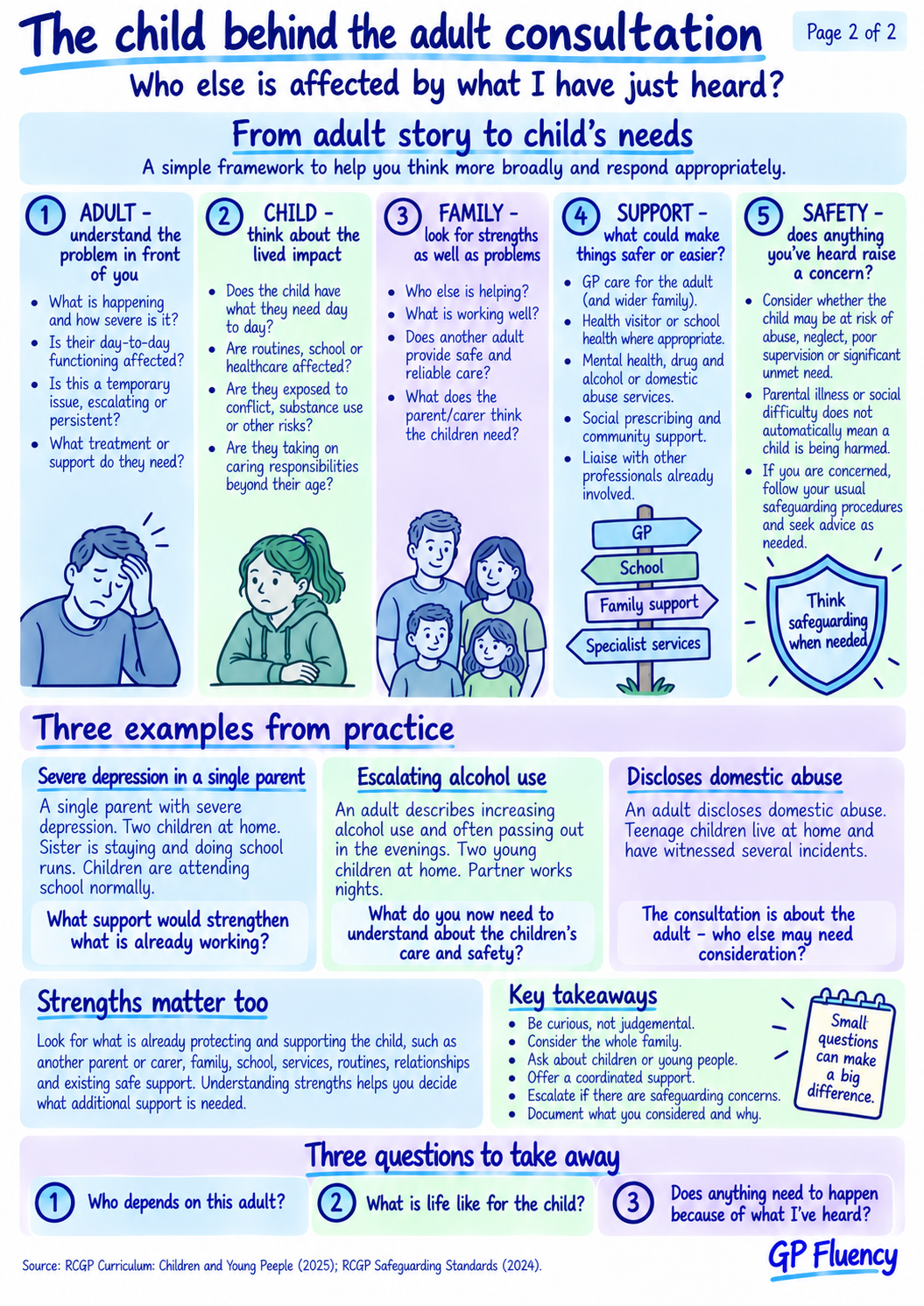
The page brings together practical learning on musculoskeletal presentations alongside Keeping children in view — resources exploring continuity of care, missed appointments, vulnerability and the child who may be affected by an adult consultation.
It is aligned with RCGP Children and Young People learning outcomes and is relevant across ST1–ST3, particularly for trainees who want to become more confident in managing children and young people in the context of real UK general practice.
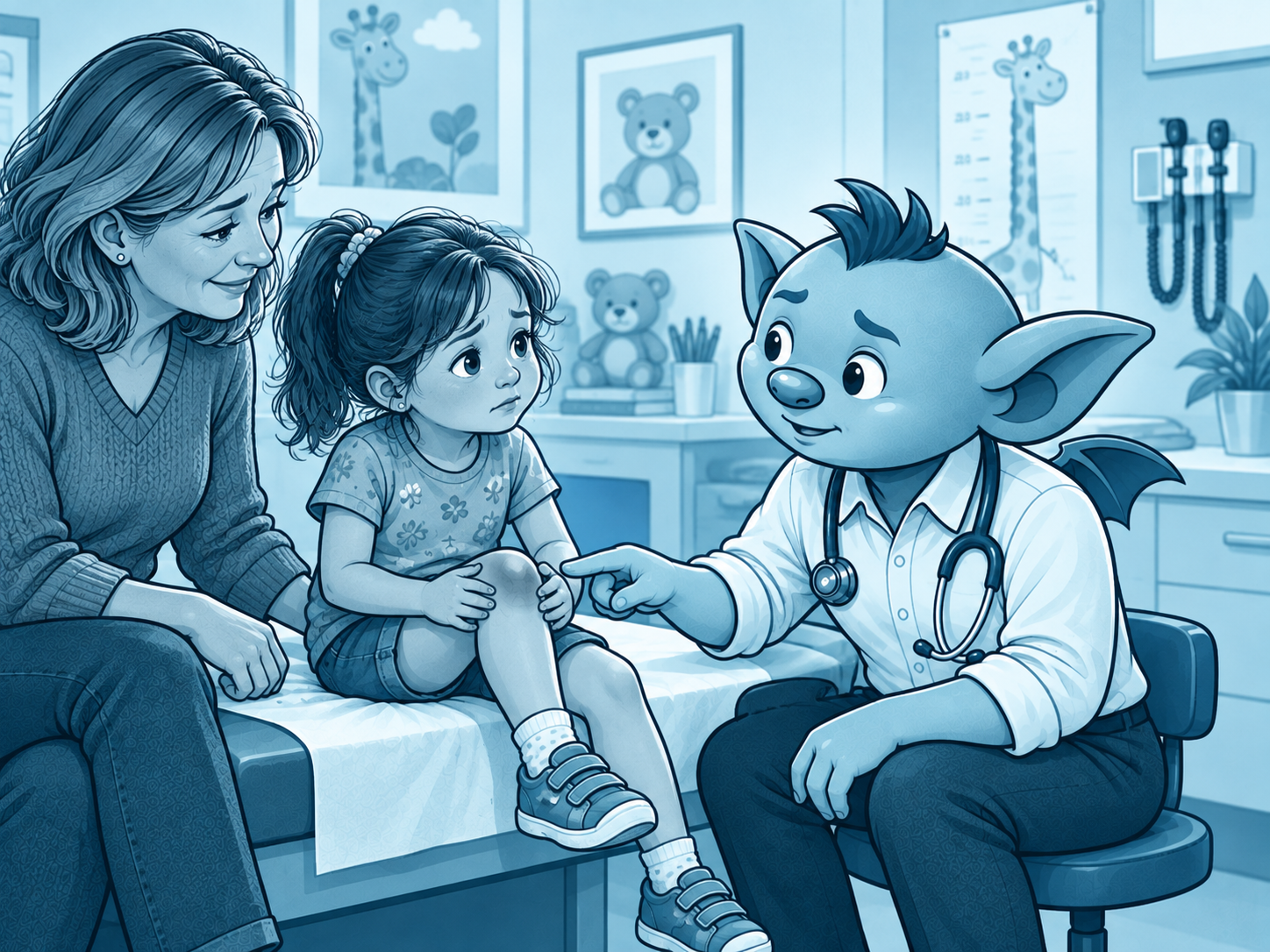
Musculoskeletal presentations in children and young people
Musculoskeletal problems in children are common, but the challenge for GP trainees is often deciding which presentations are benign, which need investigation, and which need urgent escalation.
These resources are designed to help trainees build a practical, structured approach to assessment and next steps in UK general practice, with emphasis on age, pattern, examination findings, differential diagnosis and urgency of referral.
The Child with a Limp
A practical approach to one of the most common and potentially worrying paediatric presentations in primary care.
This resource focuses on age-related differentials, red flags, examination, initial investigation and when urgent referral is needed, including septic arthritis, transient synovitis, Perthes disease and SUFE.
The Child with Joint Pain & Swelling
This resource helps trainees assess joint pain, swelling and stiffness in children and young people without overcomplicating the differential. It covers common and important causes including JIA, reactive arthritis, HSP, trauma and infection, with emphasis on pattern recognition, red flags and appropriate next steps in general practice.
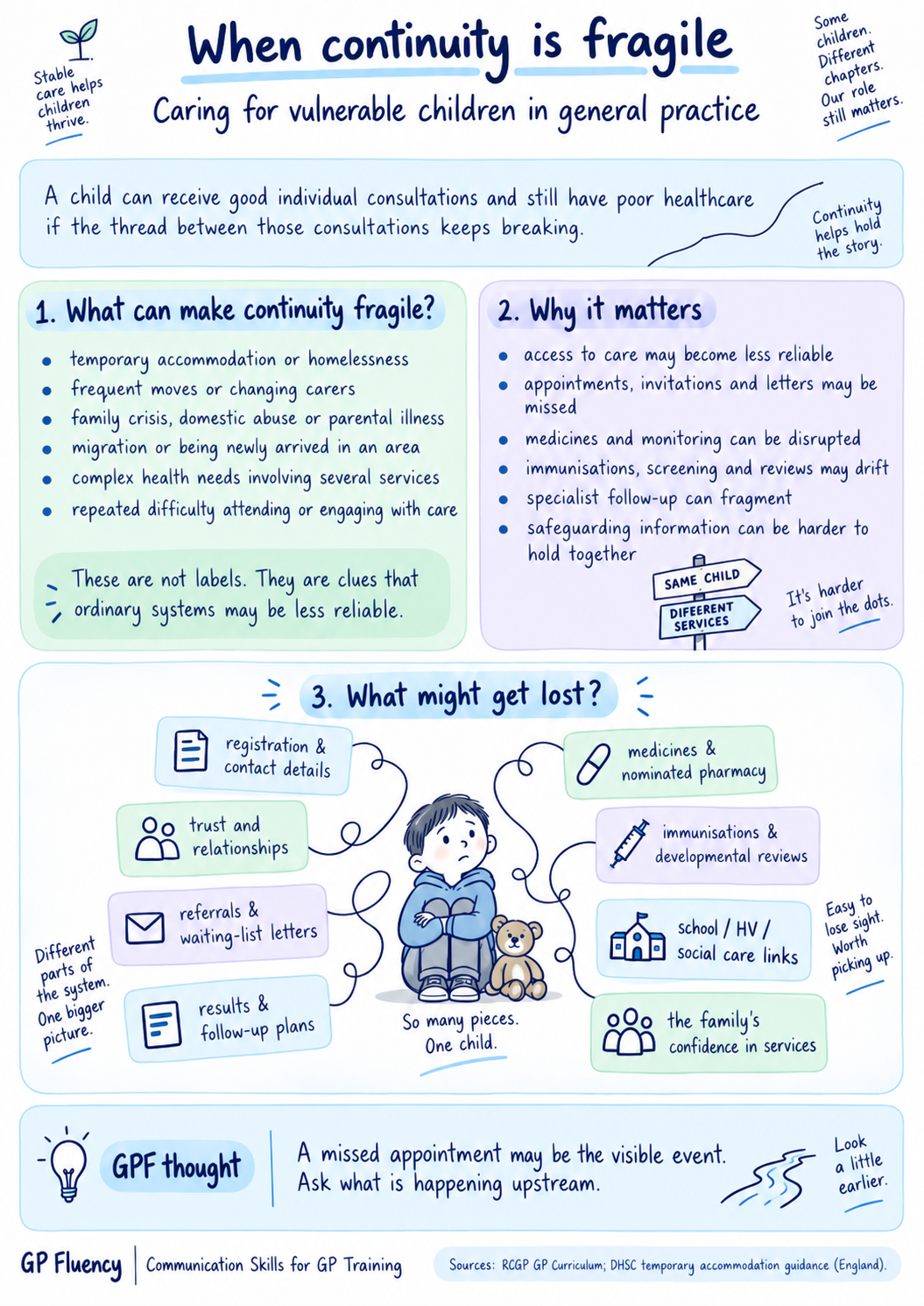
Keeping children in view
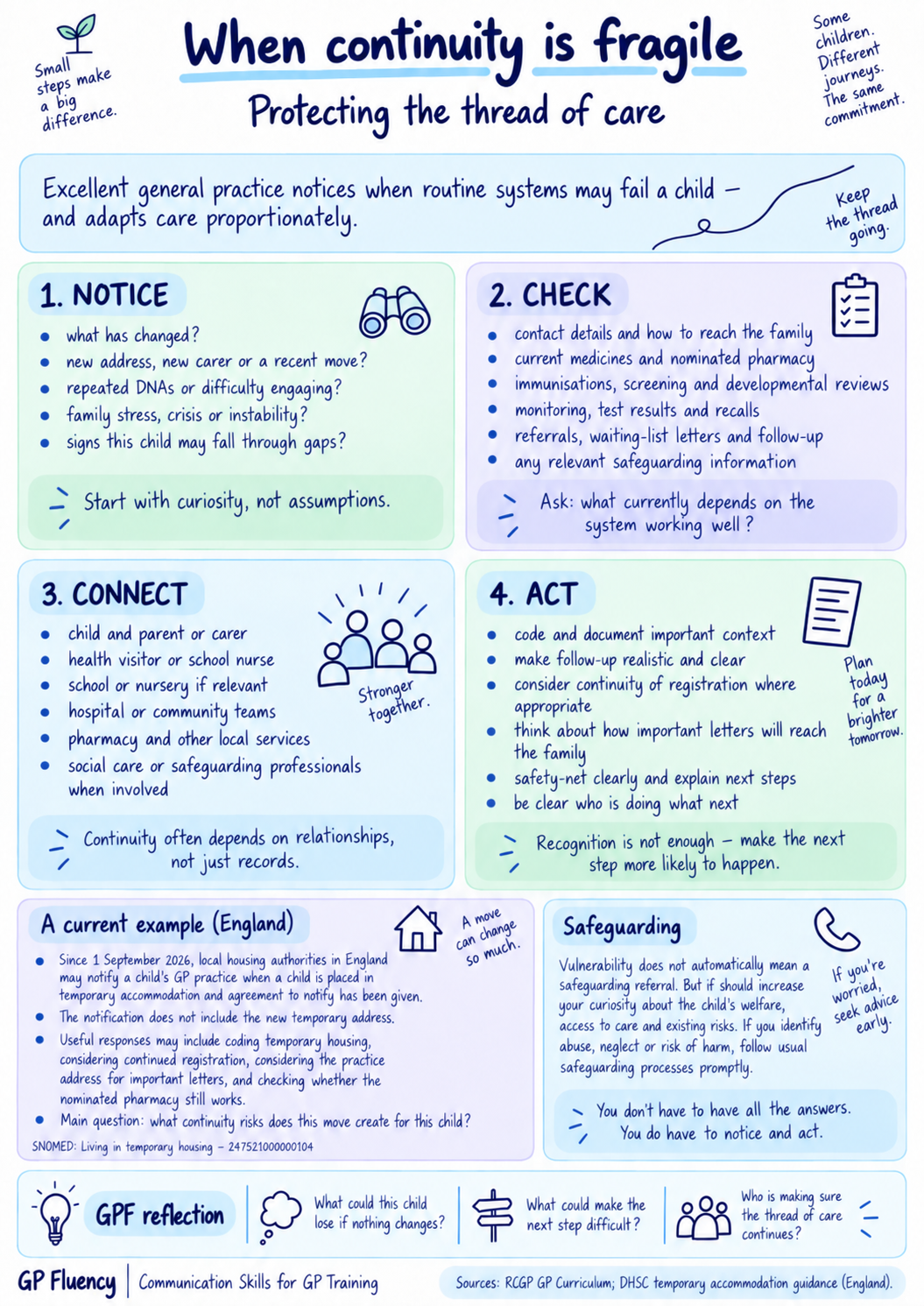
Some of the most important information about a child’s health is not contained in a diagnosis.
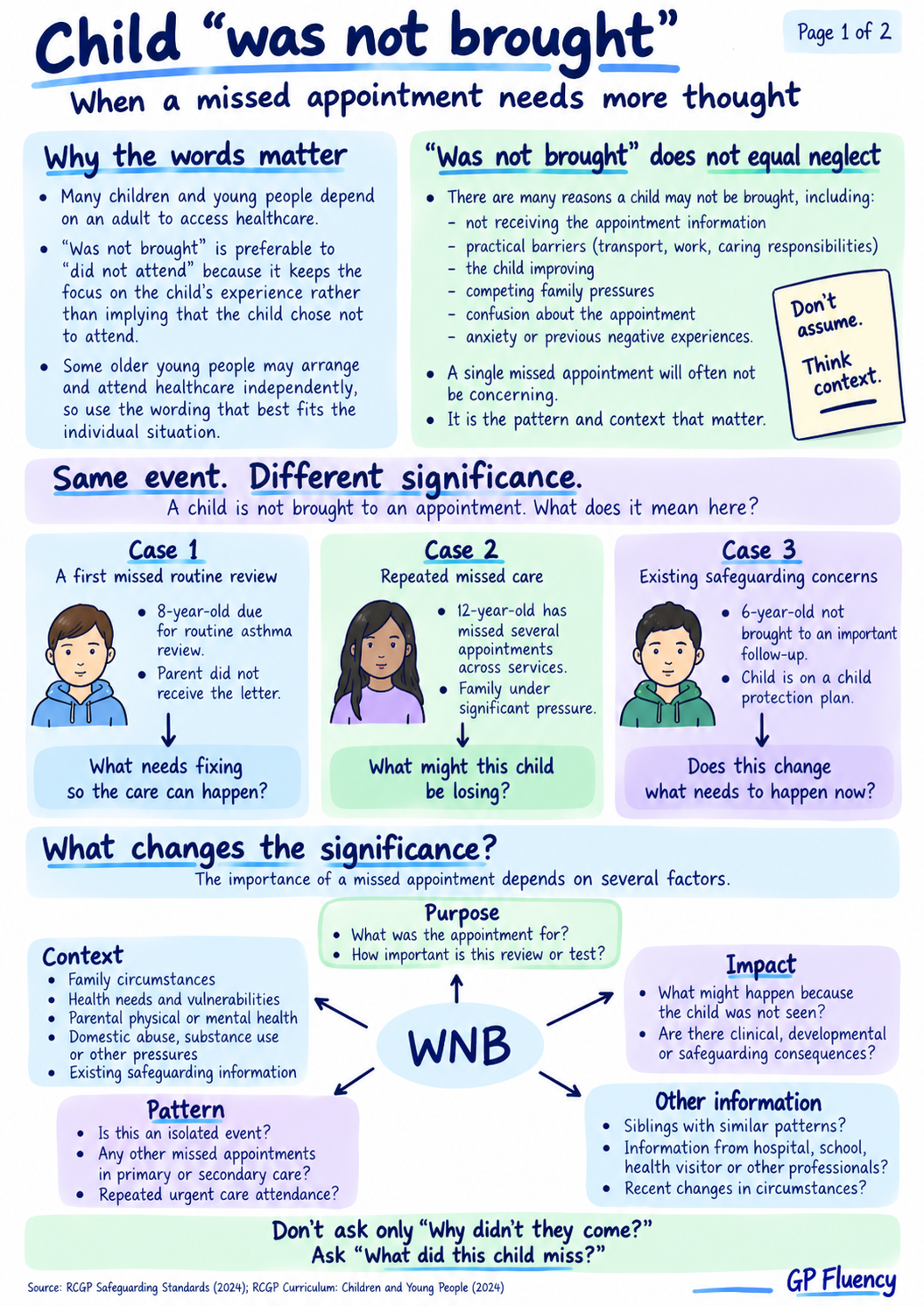
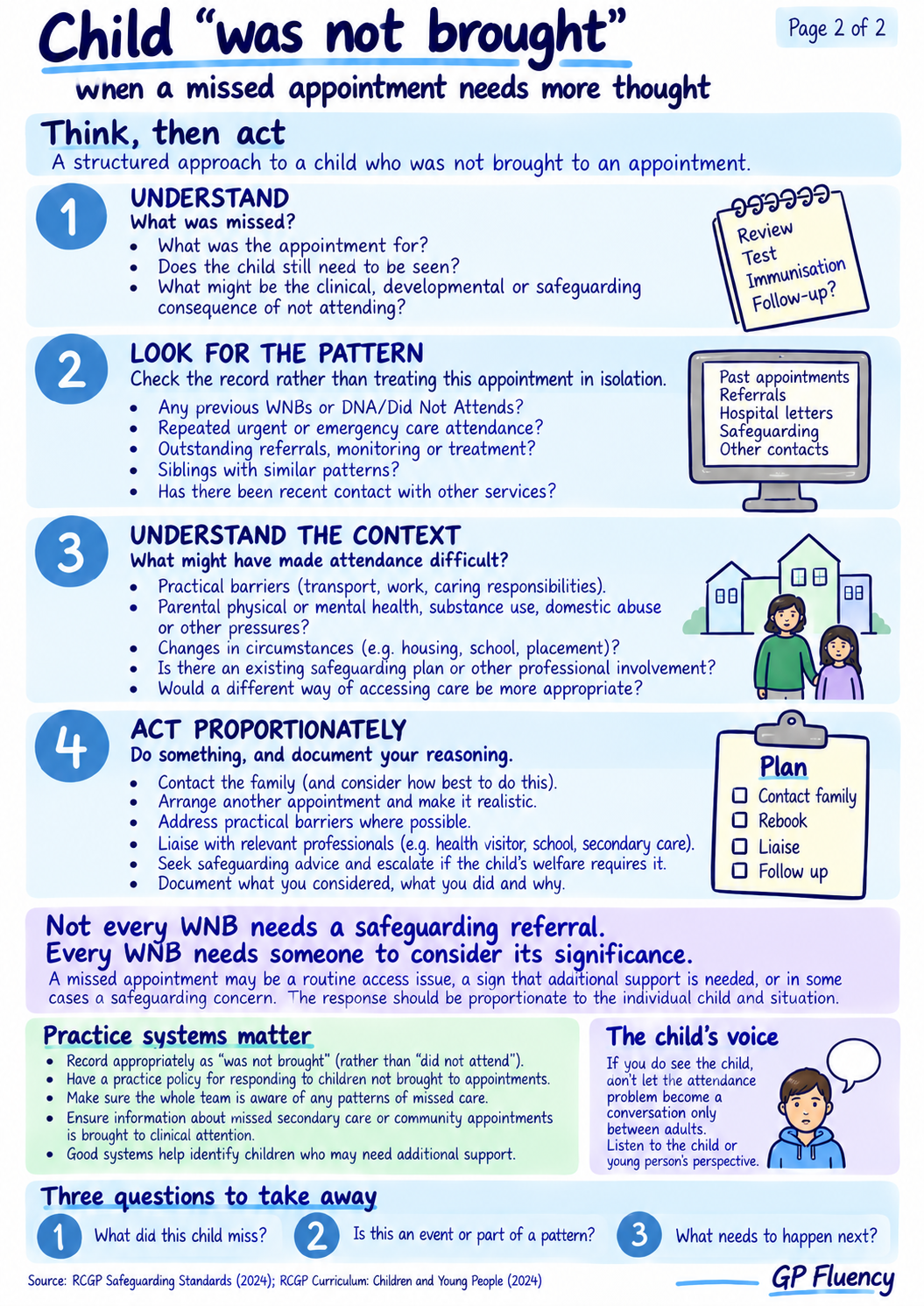
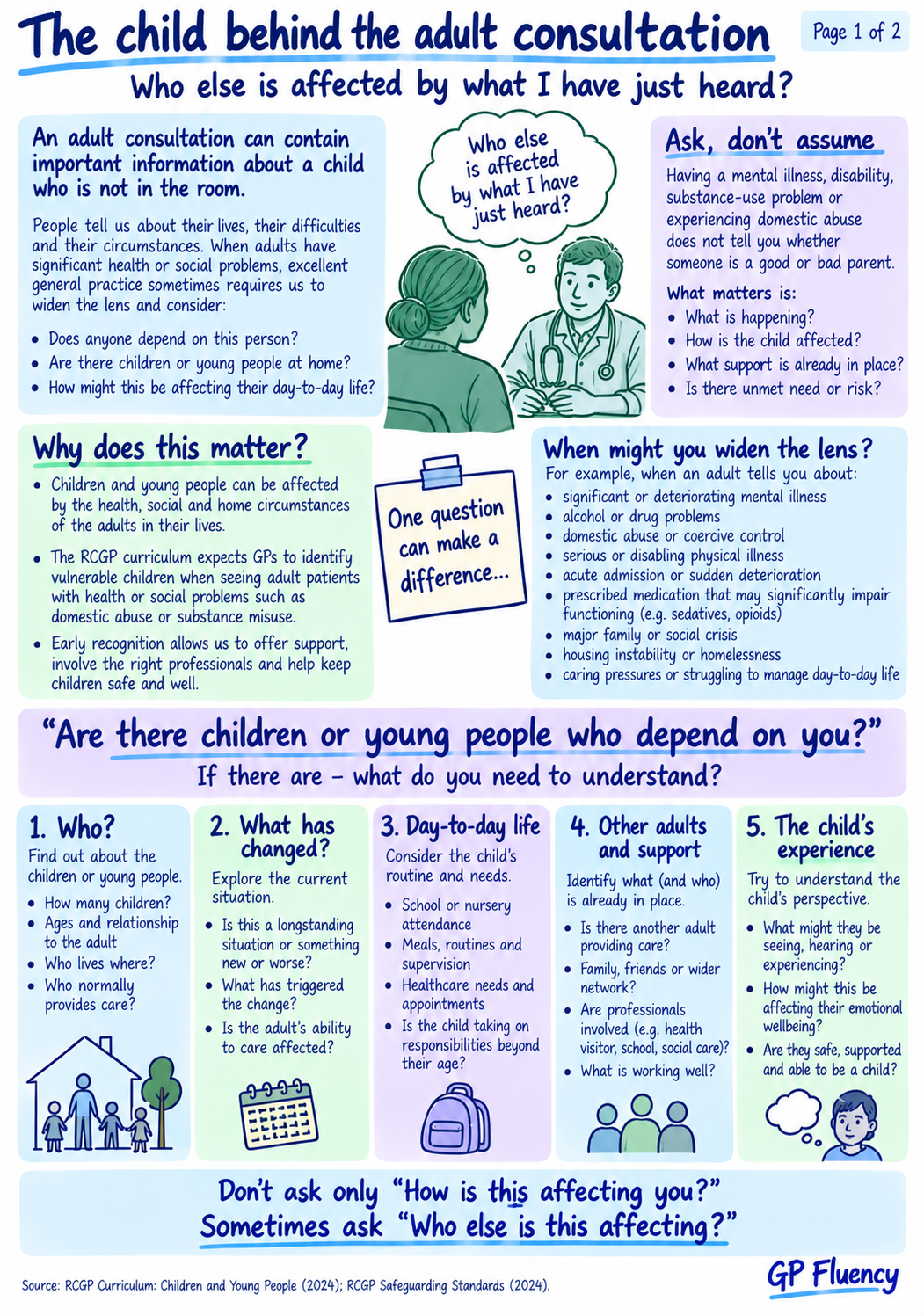
Housing instability, missed appointments, parental illness, family pressures and disrupted access to care can all affect whether a child receives the healthcare they need.
These resources focus on the GP’s role in recognising when continuity is becoming fragile, understanding the significance of a child “not being brought” to an appointment, and noticing when an adult consultation reveals important information about a child who is not in the room.
The emphasis is on curiosity without assumption, proportionate safeguarding thinking, and practical ways to keep the child’s needs visible within whole-family general practice.