Communication Skills Resources
Communication skills are central to safe, effective general practice — but are often harder to apply consistently in real consultations than they appear in theory.
This section brings together practical, consultation-focused resources designed to support GP trainees in developing clear, structured, and patient-centred communication. The emphasis is on how communication shapes clinical reasoning, shared decision-making, and patient outcomes, particularly in complex or uncertain presentations.
Each resource is designed for self-directed learning or use in supervision, reflecting the level of judgement and adaptability expected for independent practice.
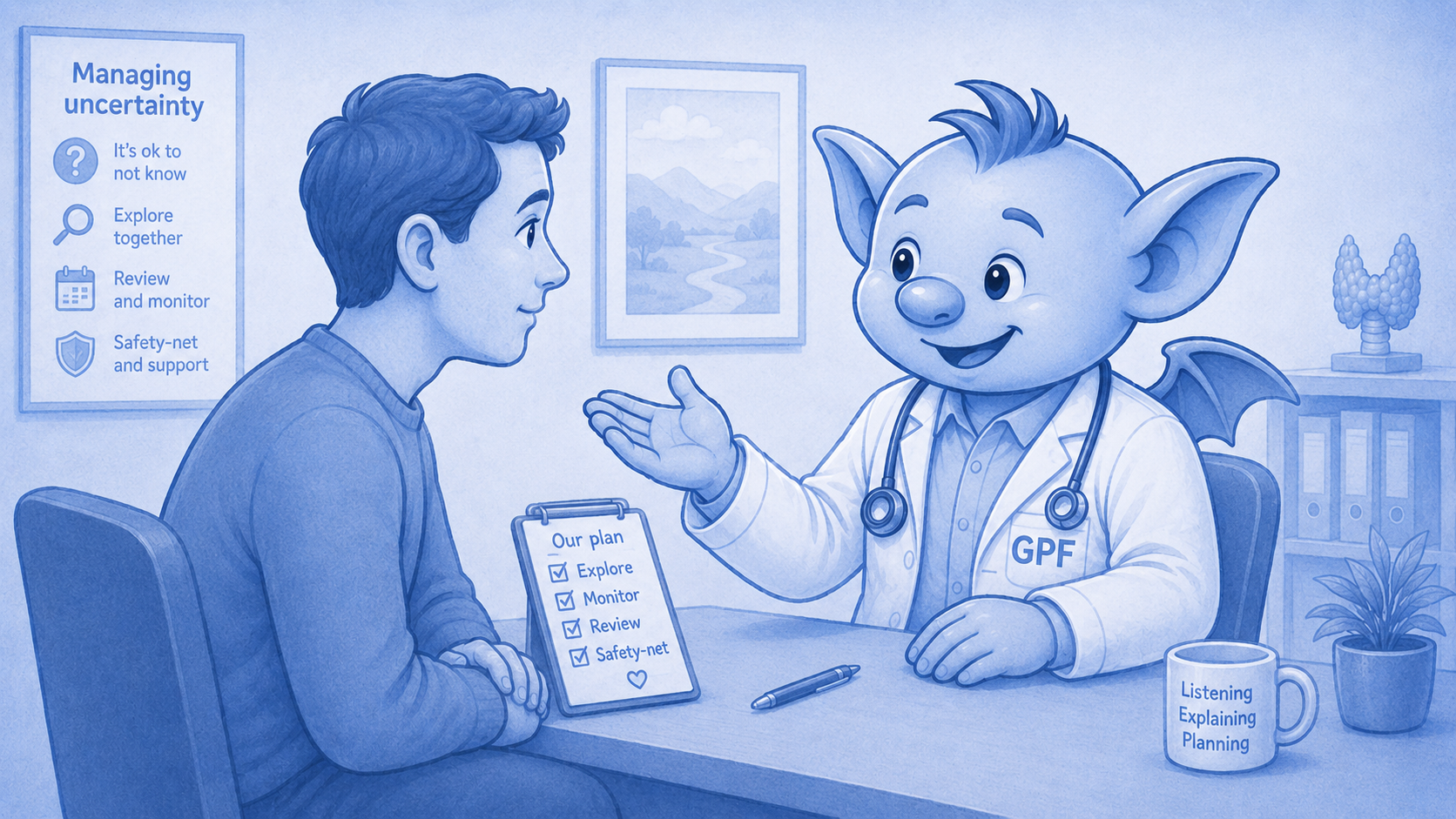
Managing, Sharing and Explaining Clinical Uncertainty
How do we explain uncertainty without sounding vague, indecisive or falsely reassuring?
This resource explores how GP trainees can communicate clinical uncertainty clearly and confidently in everyday general practice. It focuses on sharing a working diagnosis, explaining what is reassuring, naming what remains uncertain, and using time, review and safety-netting as active parts of the management plan.
It helps trainees move beyond phrases such as “I’m not sure” or “come back if it gets worse” towards specific, proportionate explanations that show clinical reasoning, maintain patient confidence and make clear what should happen next.
Saying No Without Losing the Consultation
How do we decline a request without making the patient feel dismissed, blamed or abandoned?
This resource explores how GP trainees can hold safe clinical and professional boundaries while maintaining a patient-centred consultation. Using Roger Neighbour’s consultation checkpoints alongside the GP Fluency IMP lens — Impact, Meaning and Priorities — it helps trainees look beyond the surface request and understand what may be driving it.
It focuses on common primary care situations such as requests for antibiotics, early repeat diazepam, scans, referrals and administrative letters. The resource emphasises proportionate explanation, alternative plans, safety-netting, documentation and the emotional impact of difficult refusals on the doctor.
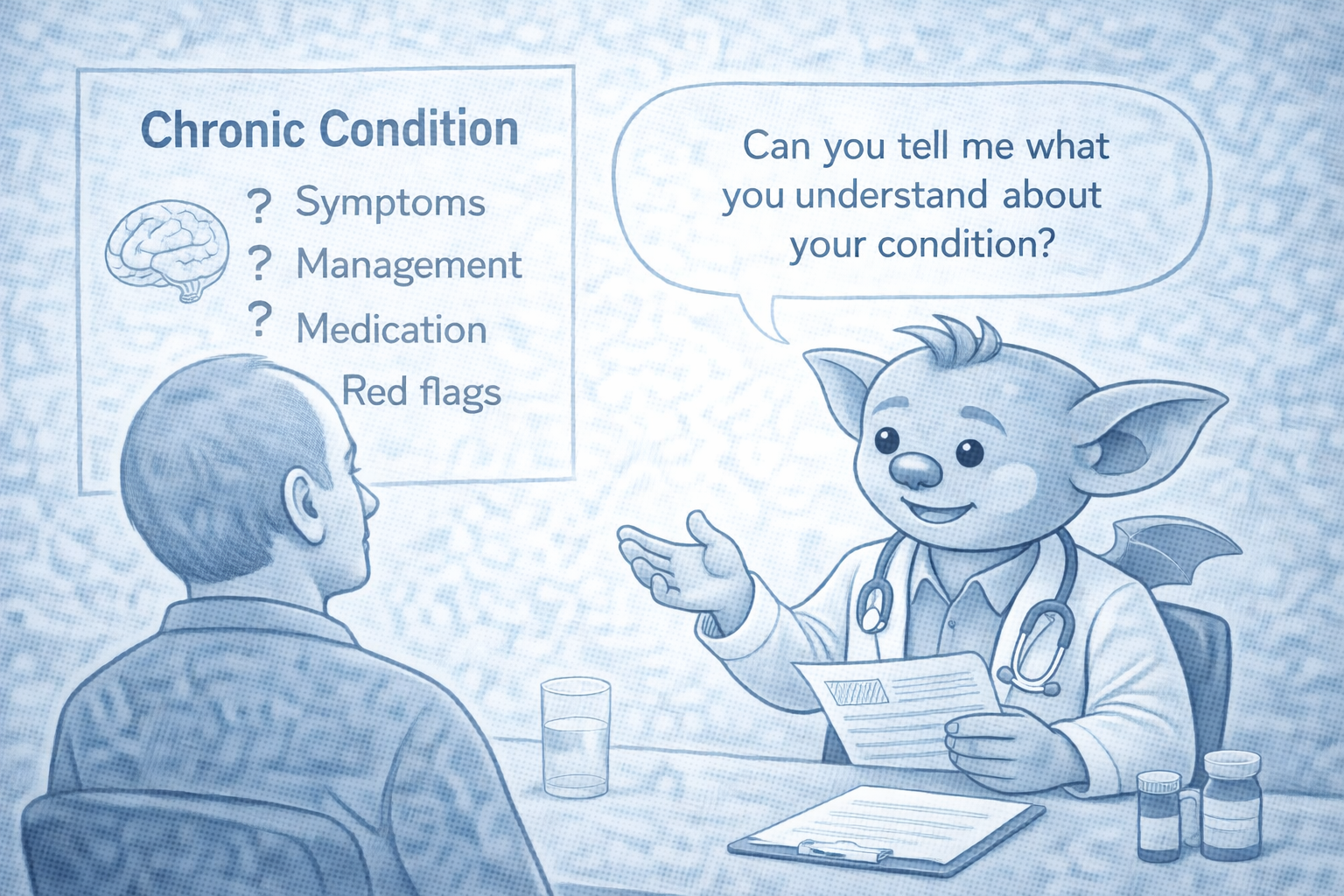
Determining a Patient’s Understanding
Do patients actually understand what has been discussed — or have we assumed they do?
This resource focuses on how to elicit and check patient understanding in a way that is natural, proportionate, and clinically useful. It distinguishes between exploring what a patient already thinks and confirming what they have taken from the consultation, with particular attention to long-term conditions where assumptions can develop over time.
Breaking Bad News
Delivering difficult news is one of the most challenging tasks in general practice. Many models exist to help develop skills and approaches to do this in a way that allows doctors to deliver the bad news in way that it can be understood and digested by their patient.
Our quick guide starts with those that are well used “SPIKES”, “Ask -tell -ask”, and “Cambridge-Calgary” approaches. The second part of our guide goes into a bit more detail as it summarises a Psychological-Integrated Model for Breaking Bad News. It provides a structured, holistic & framework to guide GPs through these conversations, placing the patient’s experience, priorities, and wider life context at the centre of care.
This model helps clinicians:
Prepare and connect with the patient in a supportive way
Deliver information clearly and empathetically, using a “warning shot” to ease emotional processing
Explore the personal meaning of the news and acknowledge emotional responses
Understand the impact on home, work, family, and daily life
Identify what matters most to the patient right now
Co-create a personalised plan that integrates clinical management with psychosocial and practical considerations
Designed for UK general practice, this approach builds on traditional frameworks by explicitly incorporating patient priorities and the real-world impact of diagnosis, enabling clinicians to provide compassionate, tailored care.
Using these skills, working out which structures, work for you and your patients when breaking bad news and explaining next steps is key
Cases for you to use with peers/educators to practice and improve those skills: