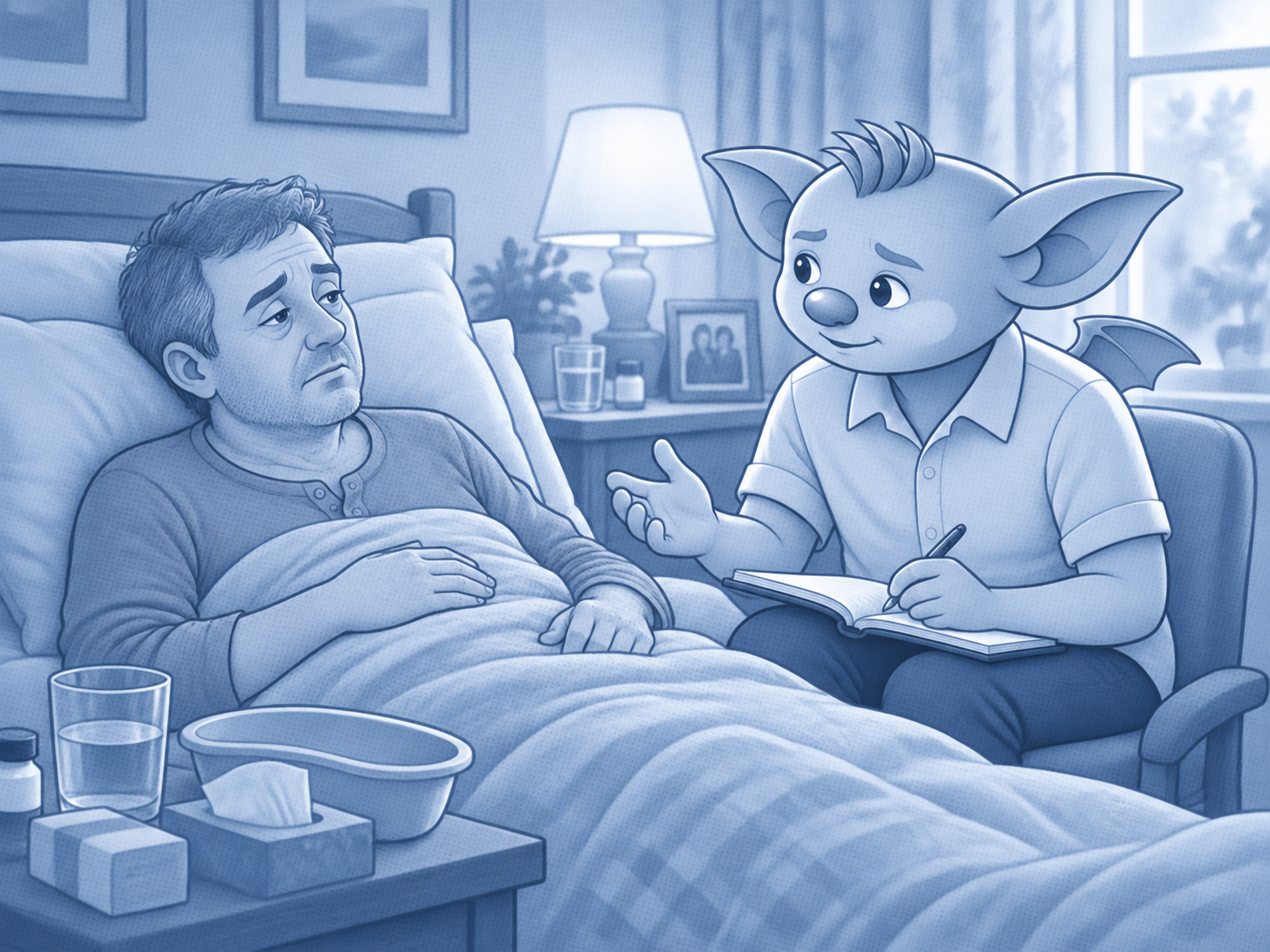
Practical resources for recognising deterioration, managing symptoms, planning ahead and caring for people approaching the end of life.
Palliative care in general practice is not limited to cancer or to the final days of life.
GPs often care for people with progressive illness alongside active treatment: managing symptoms, recognising when the overall trajectory is changing, helping patients and families plan ahead, and responding when someone may be entering the last days of life.
These resources focus on the practical decisions that arise in day-to-day general practice, including what may still be reversible, what treatment is likely to help, what matters to the patient, and when specialist support may be needed.
This is a growing collection of practical resources rather than a comprehensive guide to palliative and end of life care.
Palliative and End of Life Care
On this page:
Symptom management
Practical approaches to common symptoms in palliative care.Deterioration and planning ahead
Recognising changing trajectories, proportionality, advance care planning and ceilings of care.Approaching the last days of life
Recognising dying and providing good care when someone may be in the last days of life.When to seek further help
Situations where specialist palliative care or other additional support may be useful.
Symptom Management
Symptoms in palliative care are often multifactorial. Good management starts by understanding what is driving the symptom, what may still be reversible, and what treatment is likely to improve comfort without adding unnecessary burden.
These quick guides are designed for practical use in general practice.
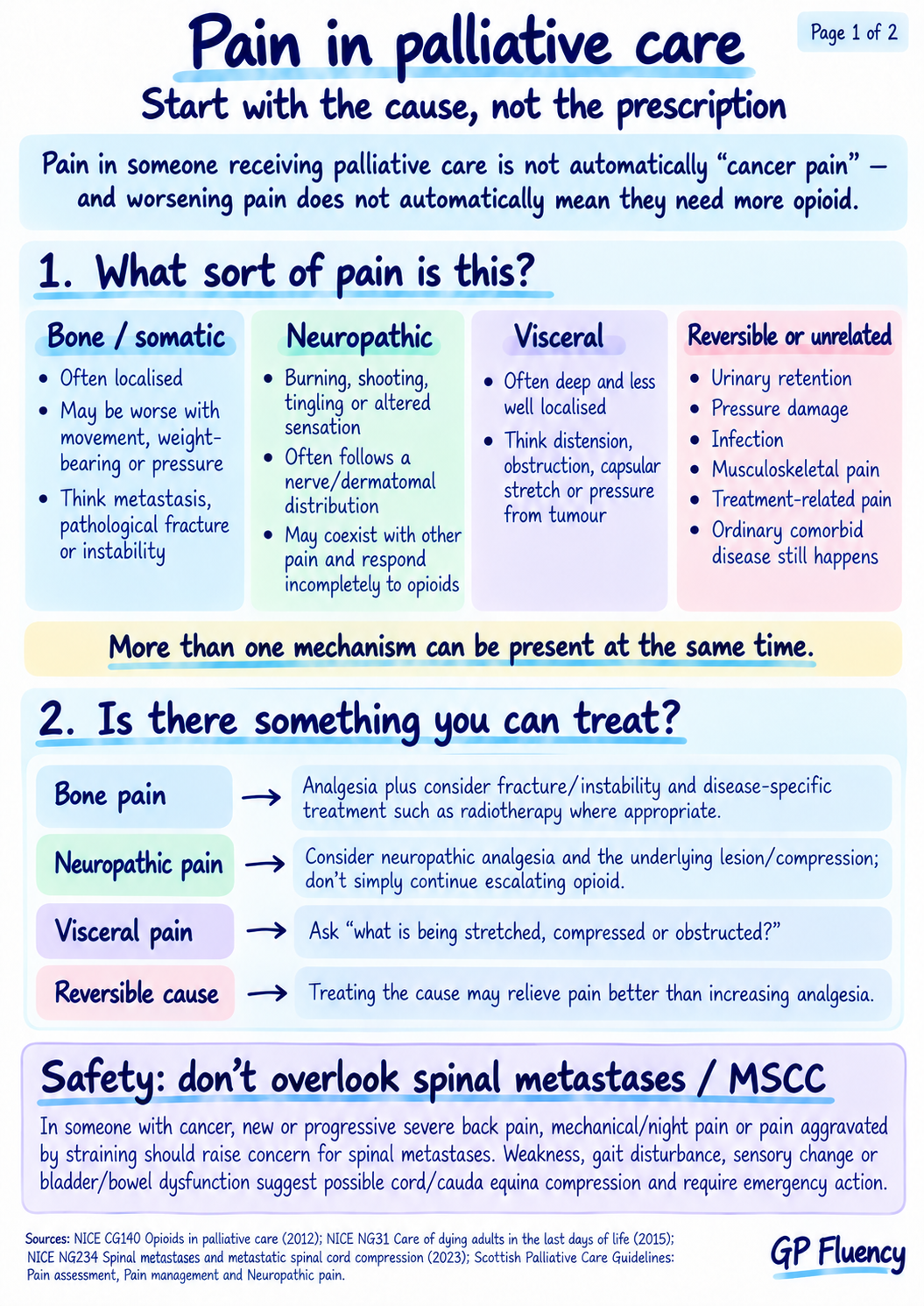
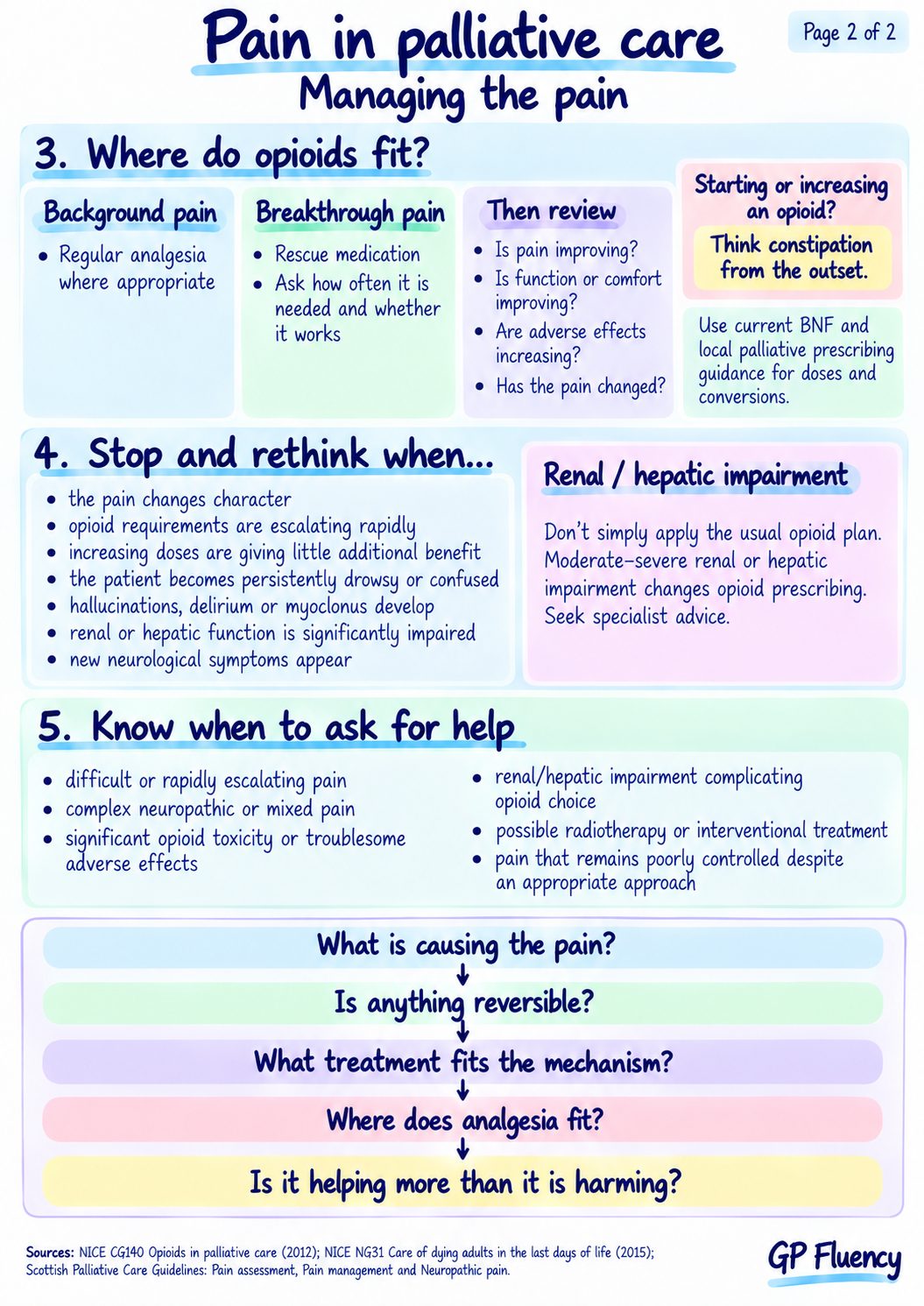
Pain in palliative care
Start with the cause, not the prescription.
Recognise different pain mechanisms, consider reversible causes, use opioids thoughtfully and know when changing pain or treatment toxicity should prompt reassessment or specialist advice.
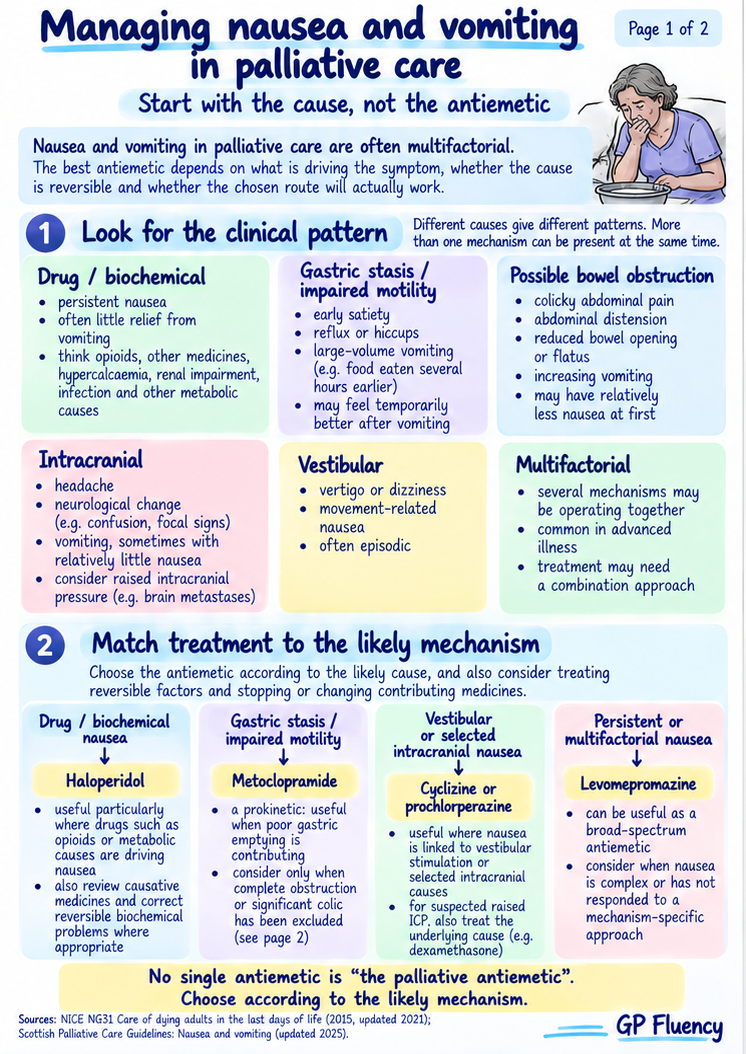
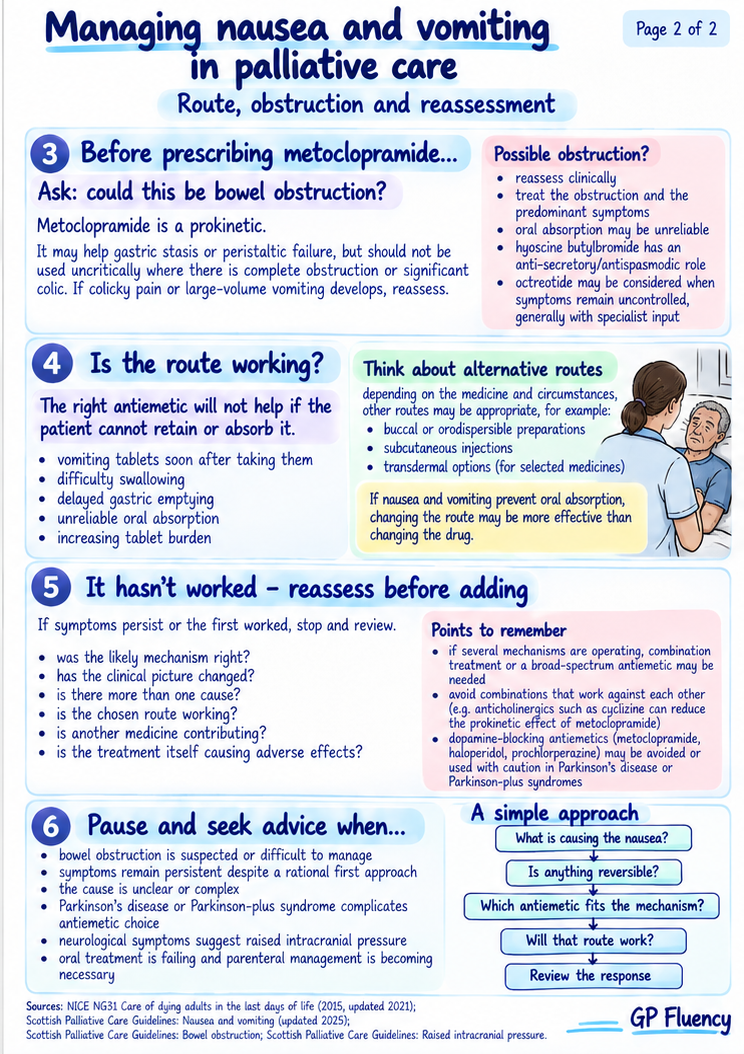
Managing nausea and vomiting in palliative care
Start with the cause, not the antiemetic.
Use the clinical pattern to identify likely mechanisms, match treatment accordingly, consider whether the route is working and reassess before simply adding another drug.
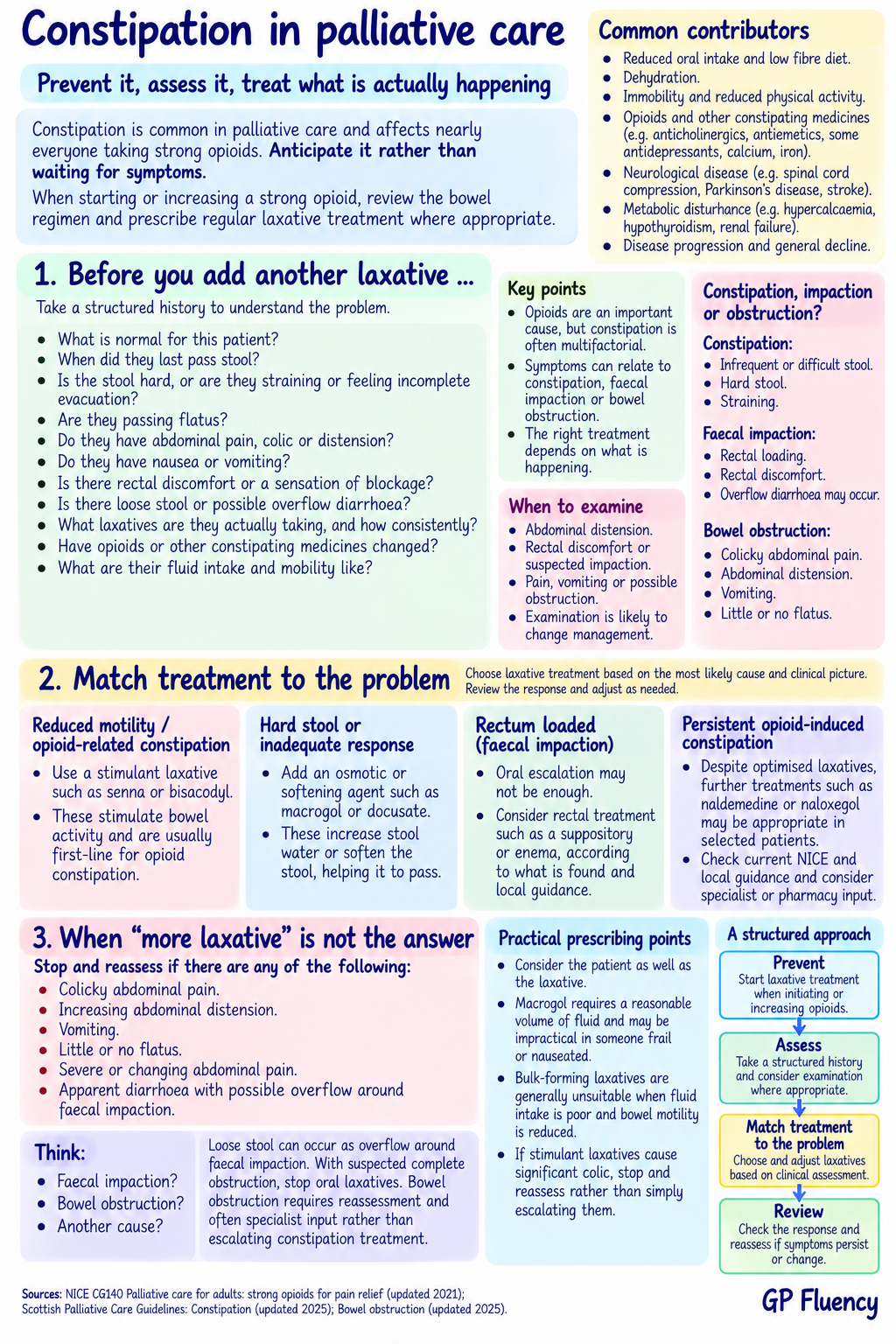
Constipation in palliative care
Prevent it, assess it, treat what is actually happening.
A practical approach to opioid-related constipation, faecal impaction, possible obstruction and choosing treatment according to the clinical picture.
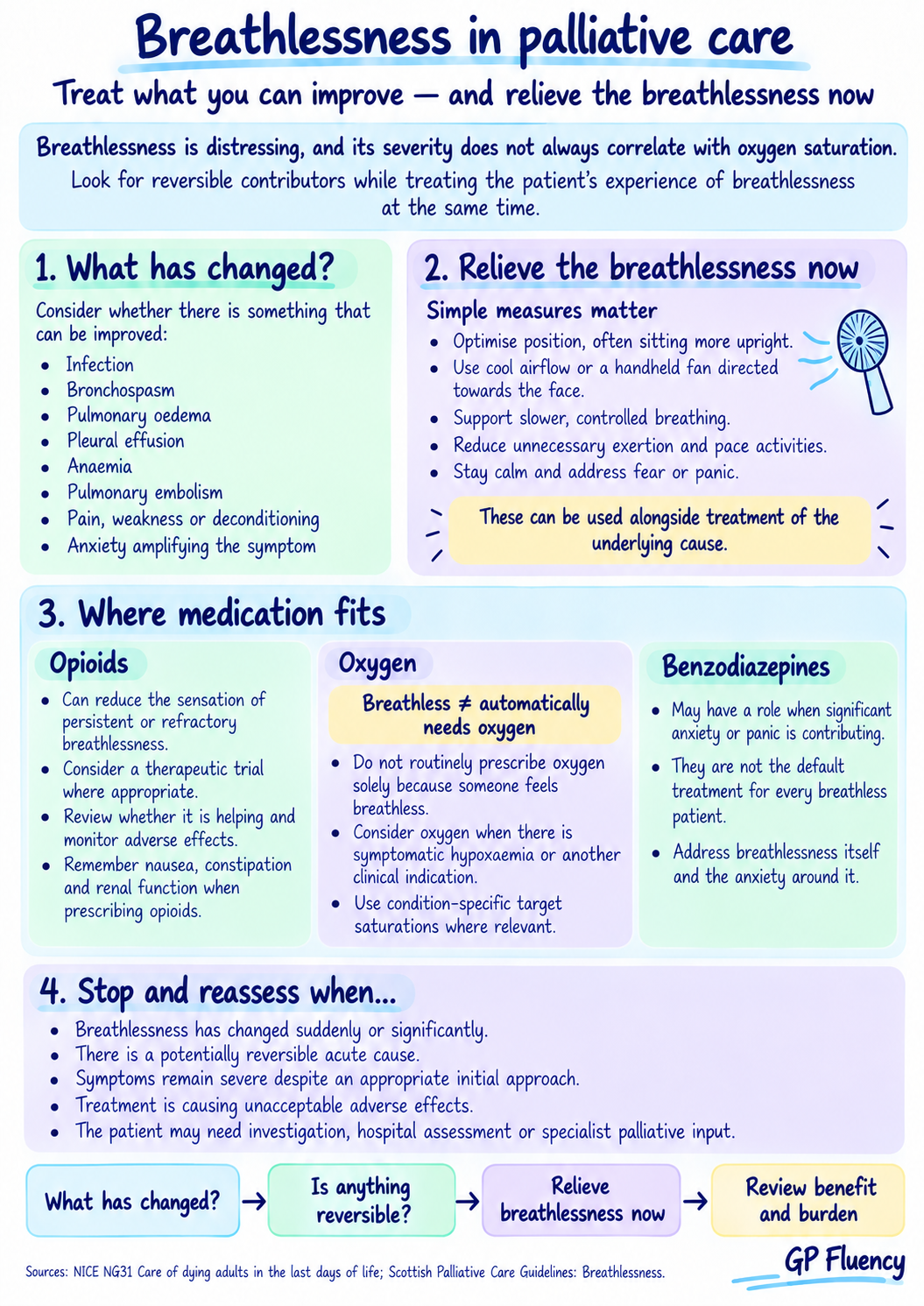
Breathlessness in palliative care
Treat what you can improve and relieve the breathlessness as much as possible.
Look for reversible contributors while also addressing the patient’s experience of breathlessness, including simple measures, appropriate medication and proportionate use of oxygen.
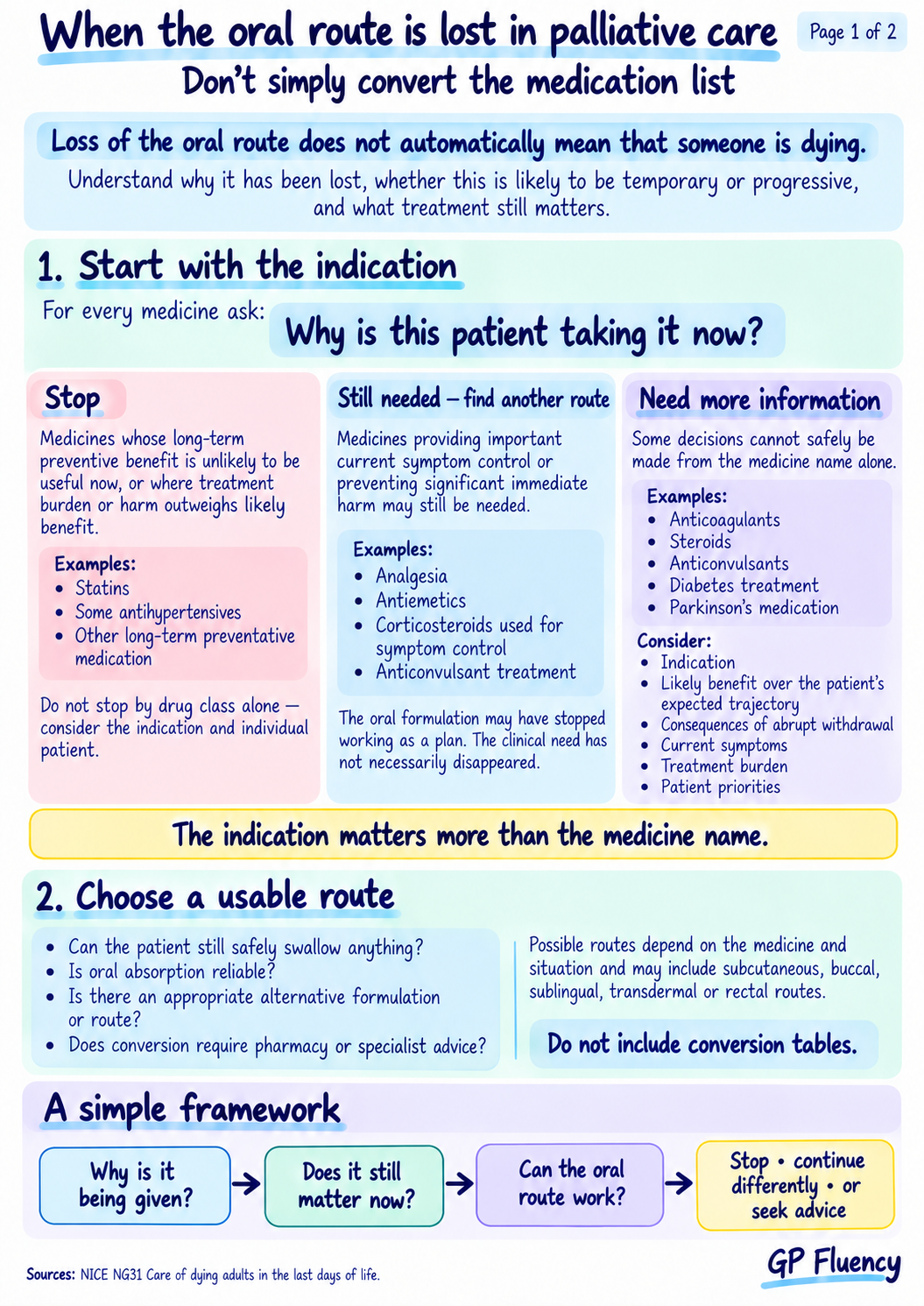
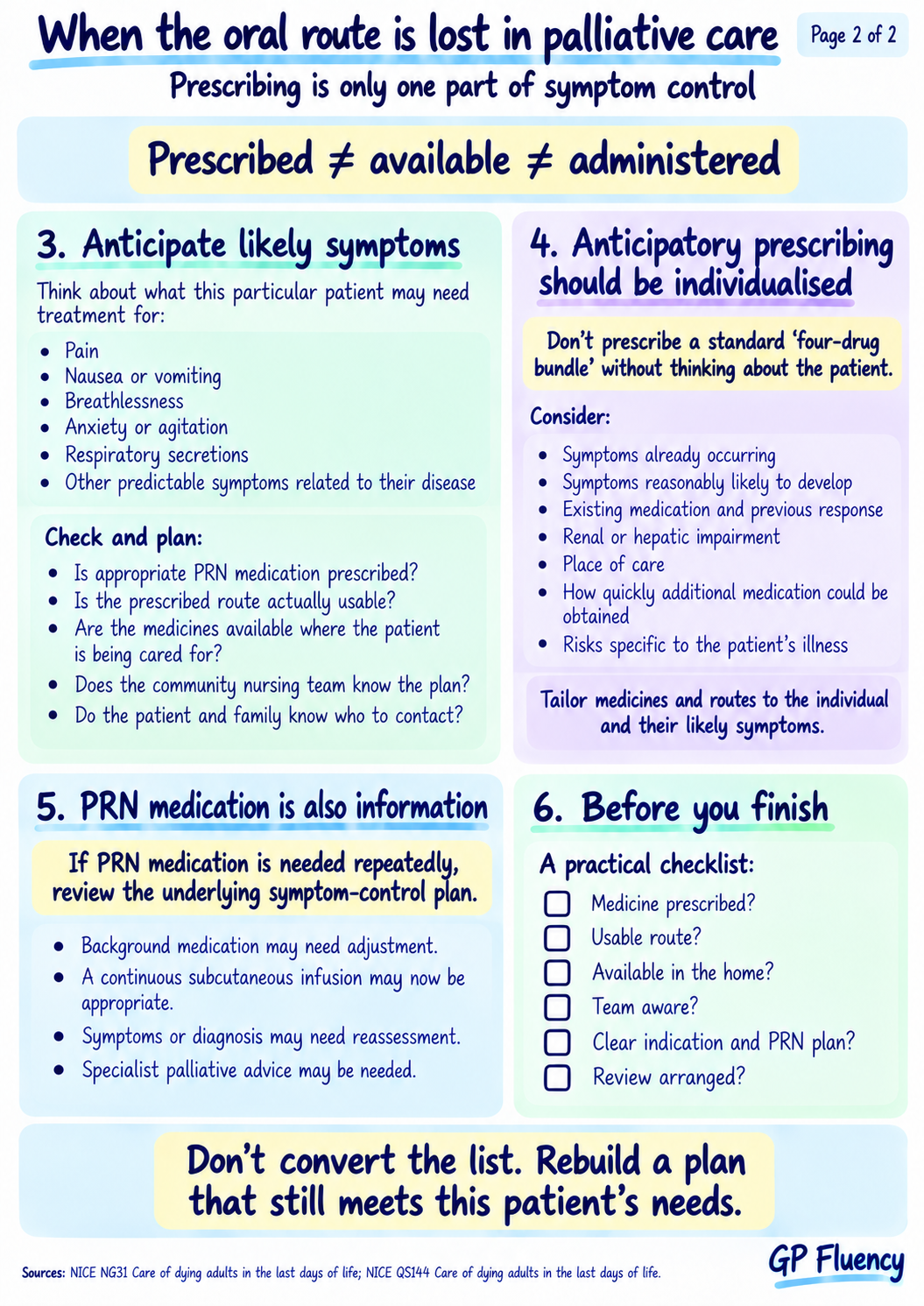
When the oral route is lost
Don’t simply convert the medication list.
Review why each medicine is still needed, choose a usable route, anticipate likely symptoms and make sure prescribed medication can actually be accessed and given when needed.
Deterioration and planning ahead
As illness progresses, decisions are rarely as simple as choosing between active treatment and palliative care. Potentially reversible problems may sit alongside an overall trajectory of deterioration.
These resources support proportionate decision-making, planning ahead and conversations about what matters if health changes further.
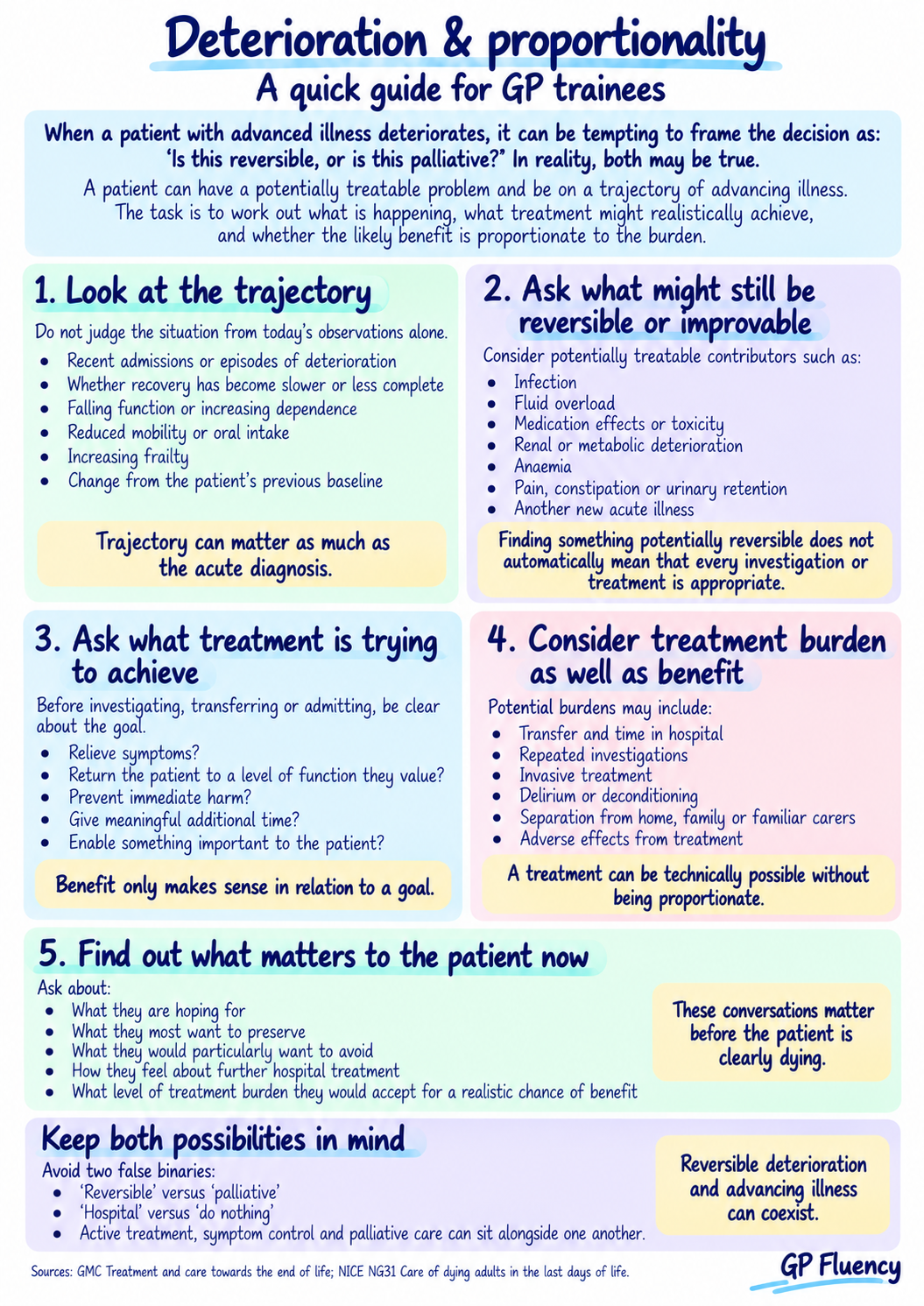
Deterioration and proportionality
Reversible deterioration and advancing illness can coexist.
Look beyond the acute problem to the wider trajectory. Consider what may still be reversible, what treatment could realistically achieve, the burden it may bring and what matters to the patient now.
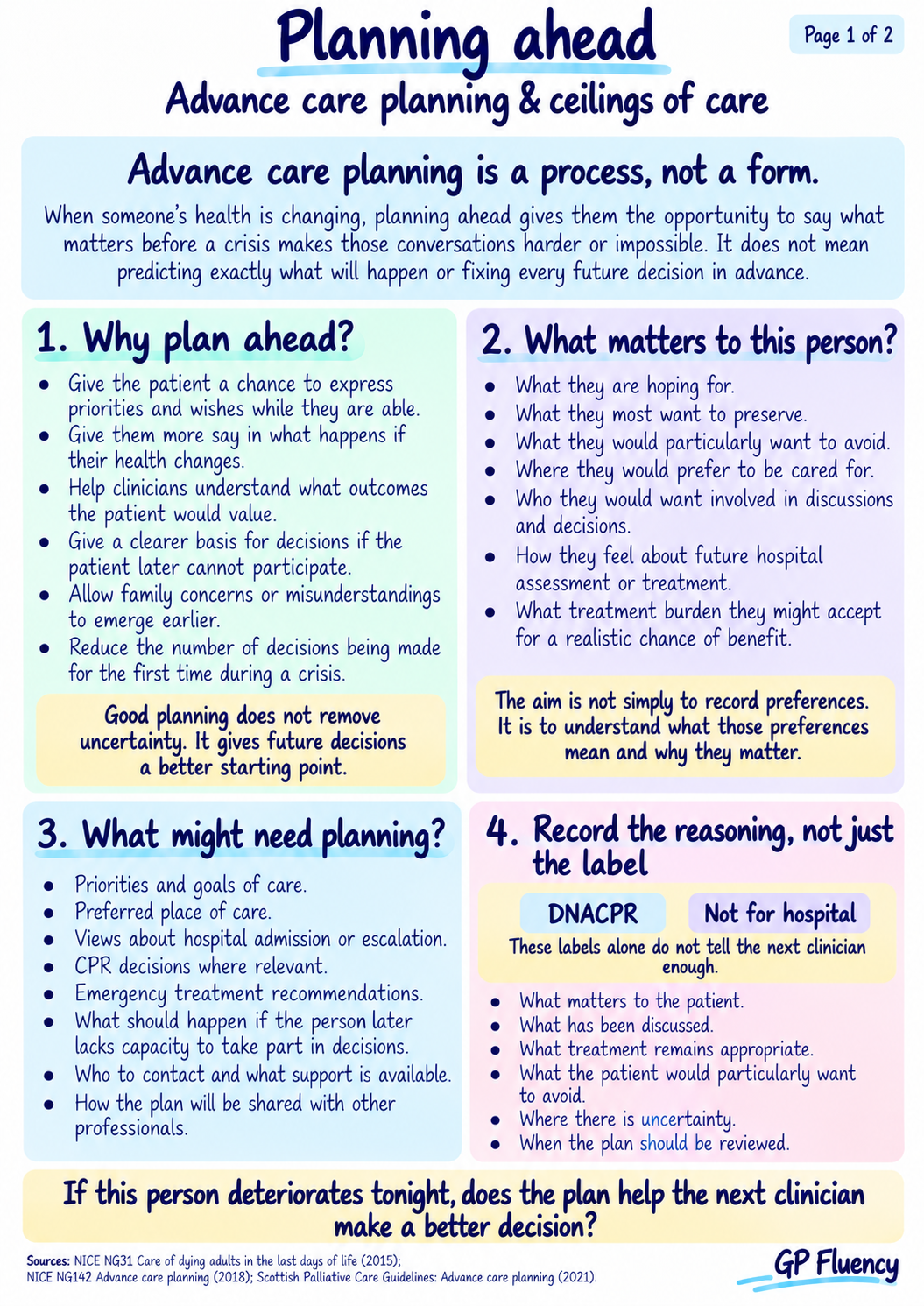
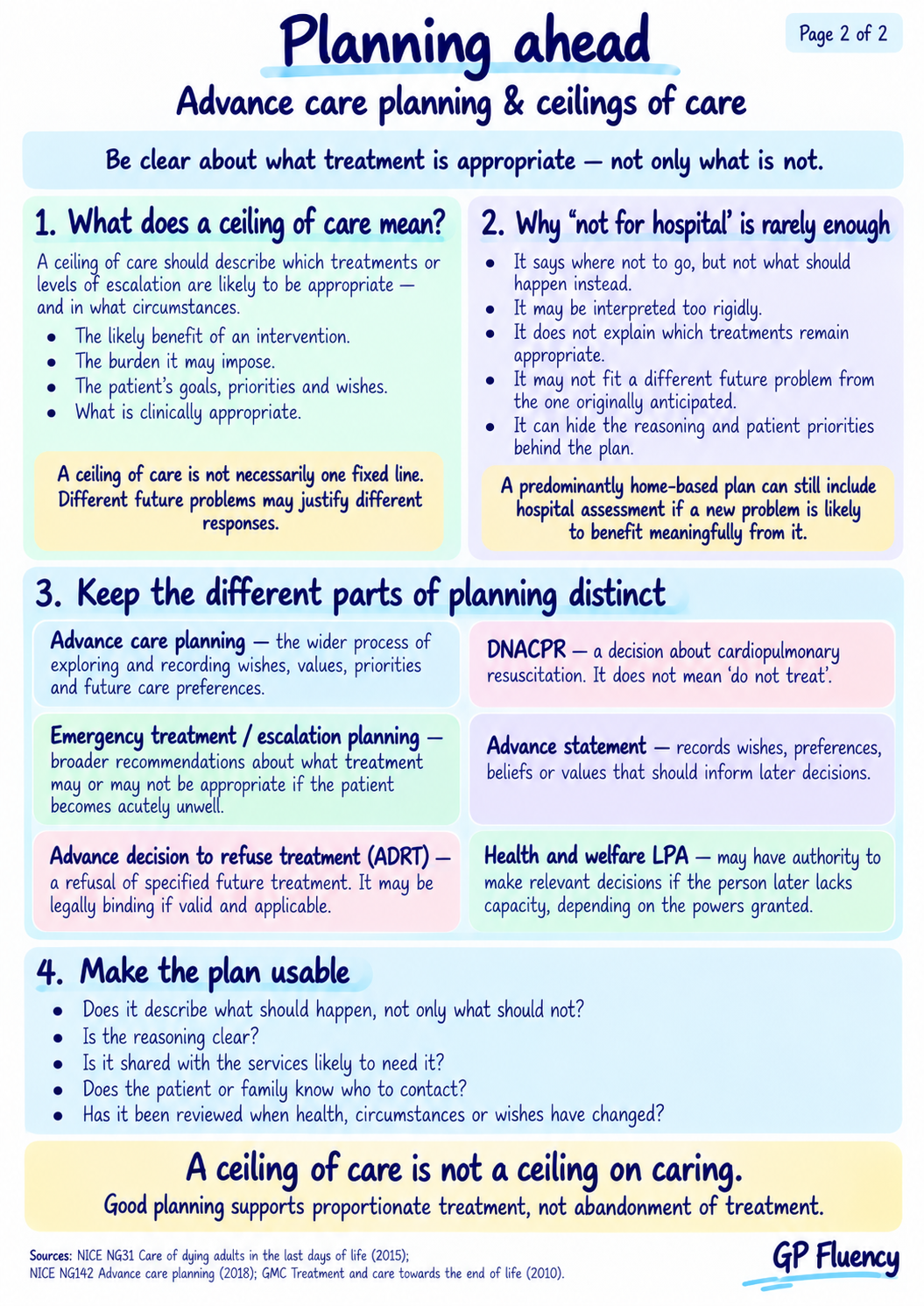
Planning ahead: advance care planning & ceilings of care
Advance care planning is a process, not a form.
A practical guide to planning before a crisis, understanding what a ceiling of care actually means, keeping DNACPR and wider emergency planning distinct, and making sure plans are useful to the clinicians who may need them later.
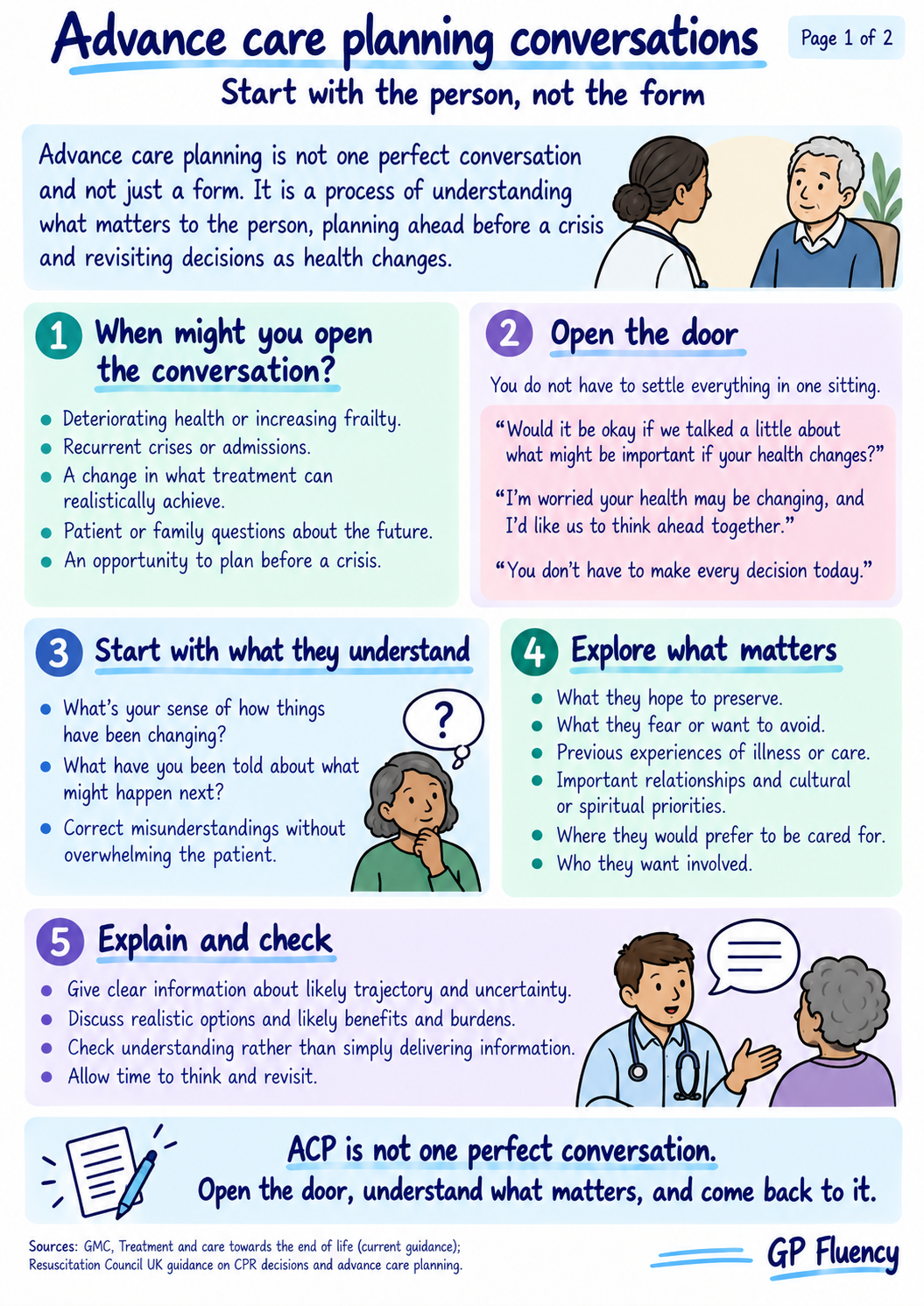
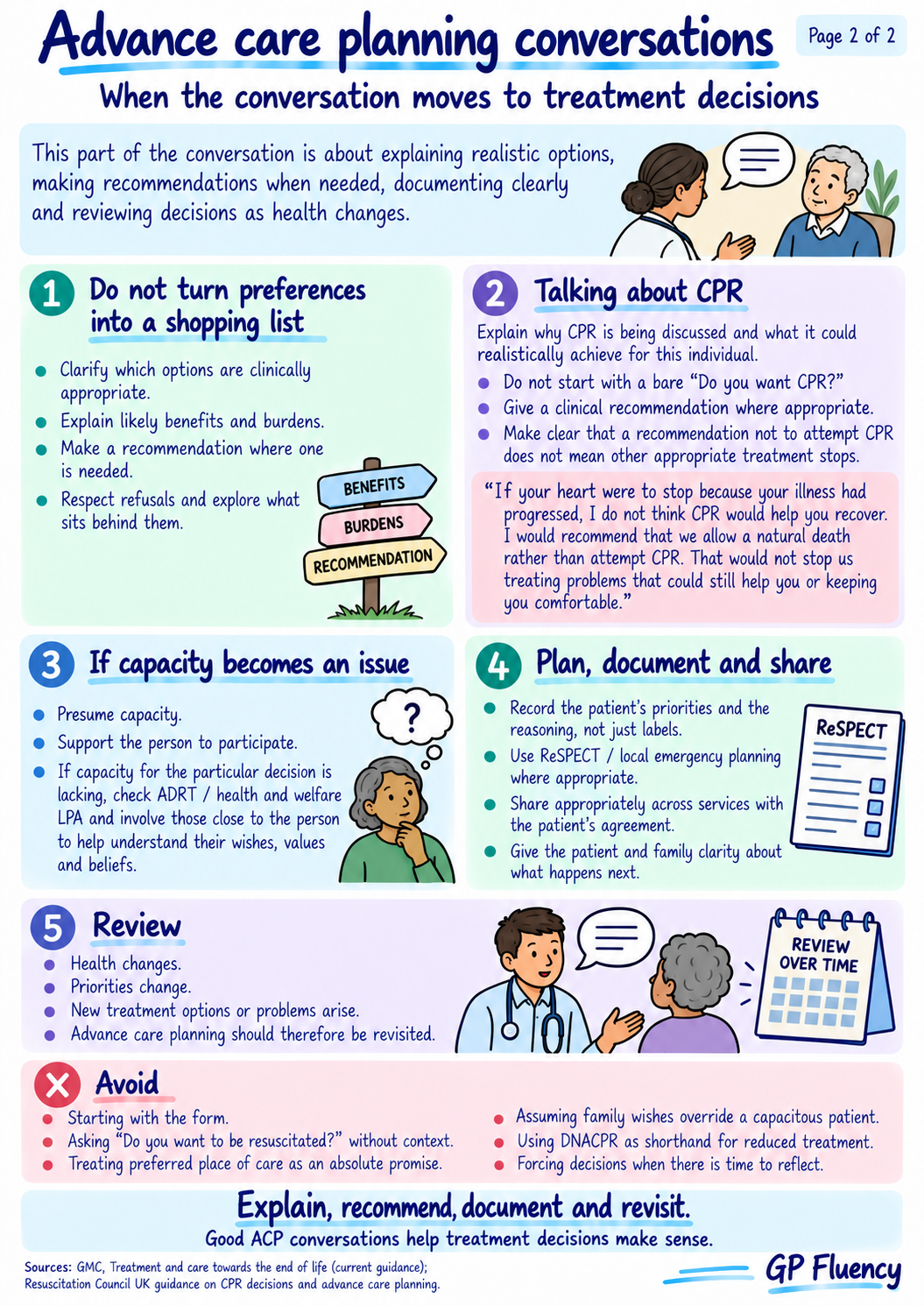
Advance care planning conversations
Start with the person, not the form.
A practical communication guide for opening conversations about future care, exploring what matters, discussing realistic treatment options & CPR sensitively. Documenting and revisiting decisions as health changes.
Approaching the last days of life
Recognising that a patient may be entering their last days of life needs clinical judgement, awareness of the overall trajectory & repeated review when there’s uncertainty.
Care remains active: relieving distress, considering proportionate reversible causes, anticipating likely needs and supporting those close to the patient.
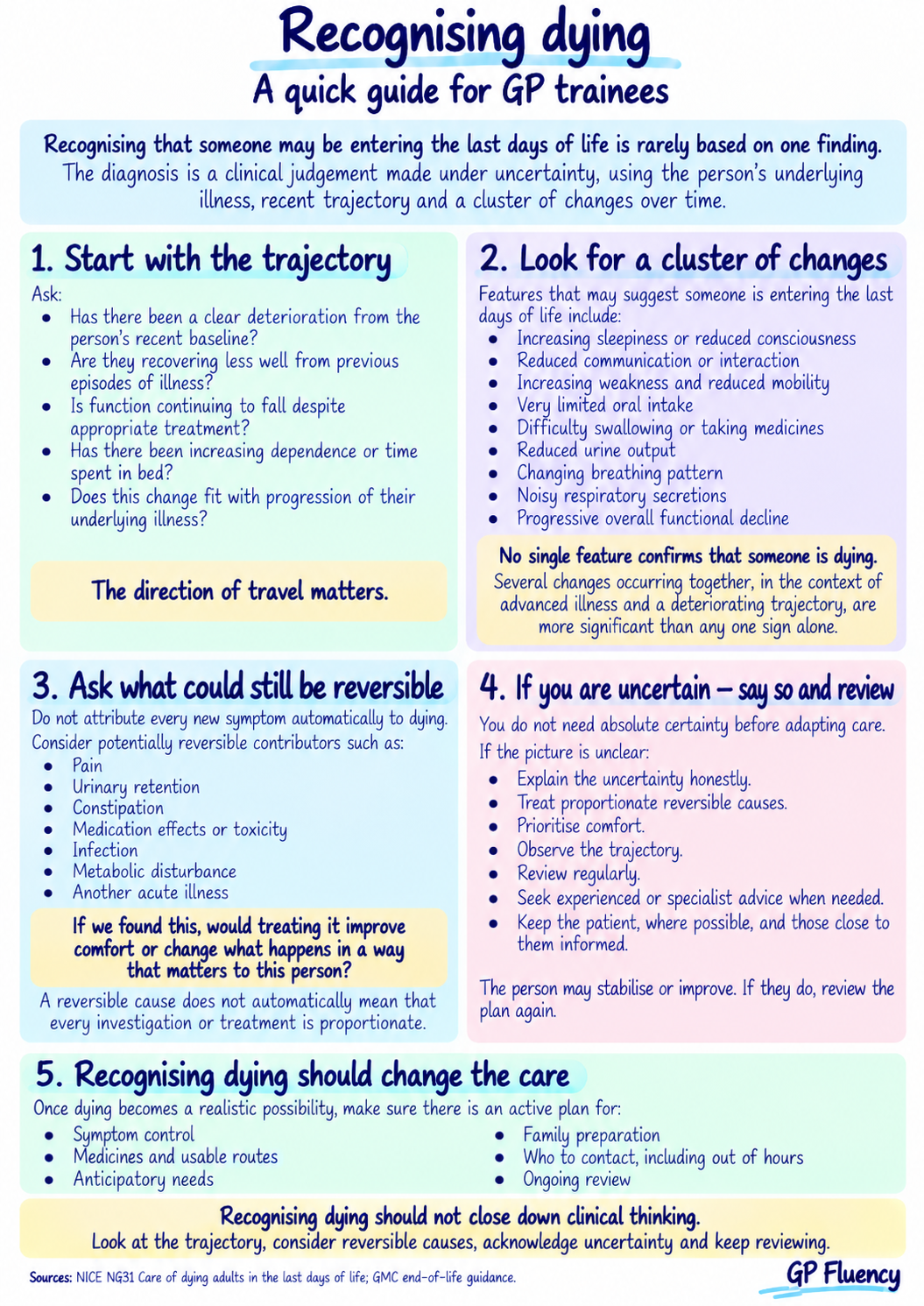
Recognising dying
Look for the pattern and keep reviewing.
Use the underlying illness, recent trajectory and a cluster of changes to recognise when dying may be a realistic possibility. Continue to consider reversible contributors and review the plan if the person stabilises or improves.
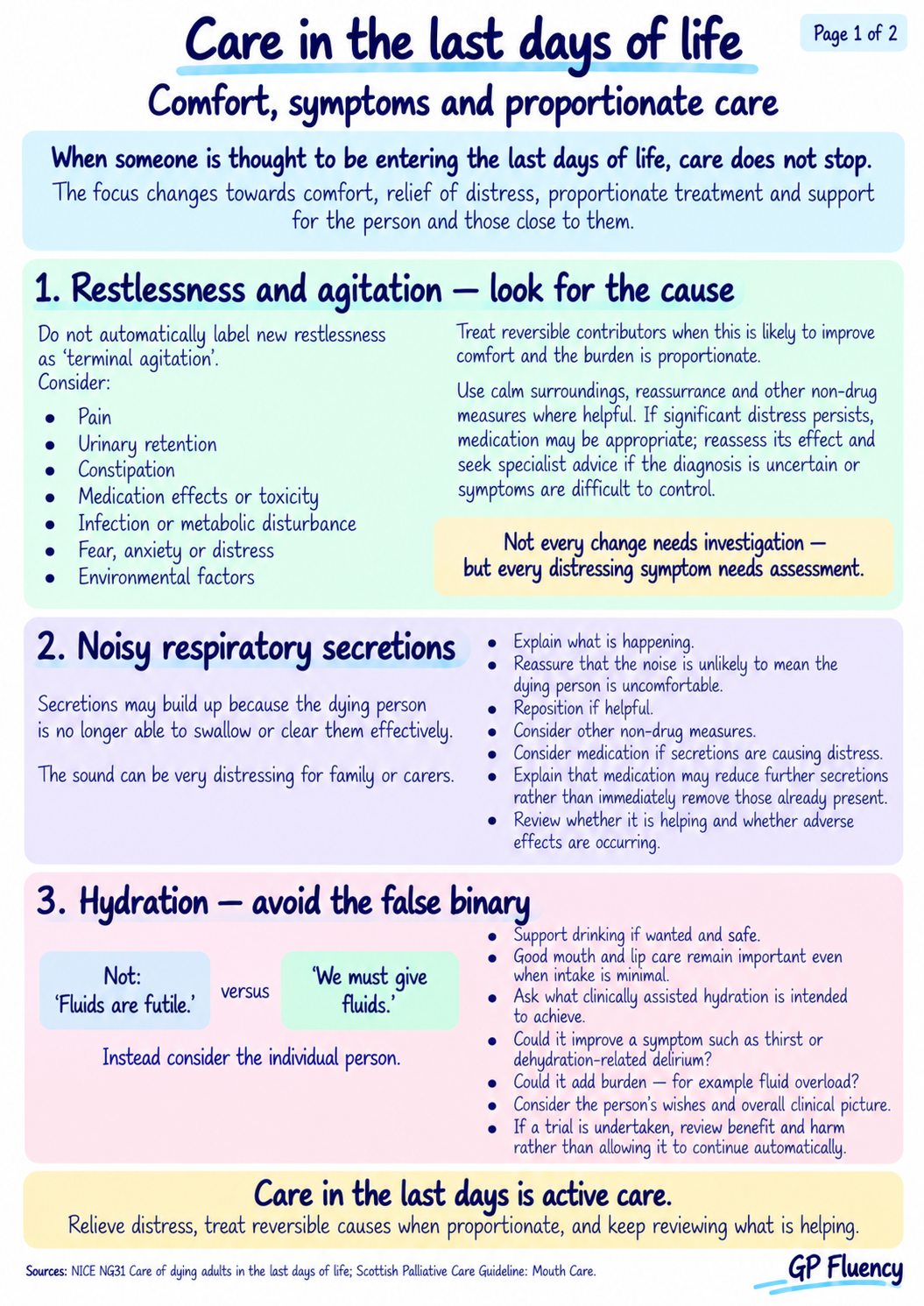
Care in the last days of life
Comfort, symptoms and proportionate care.
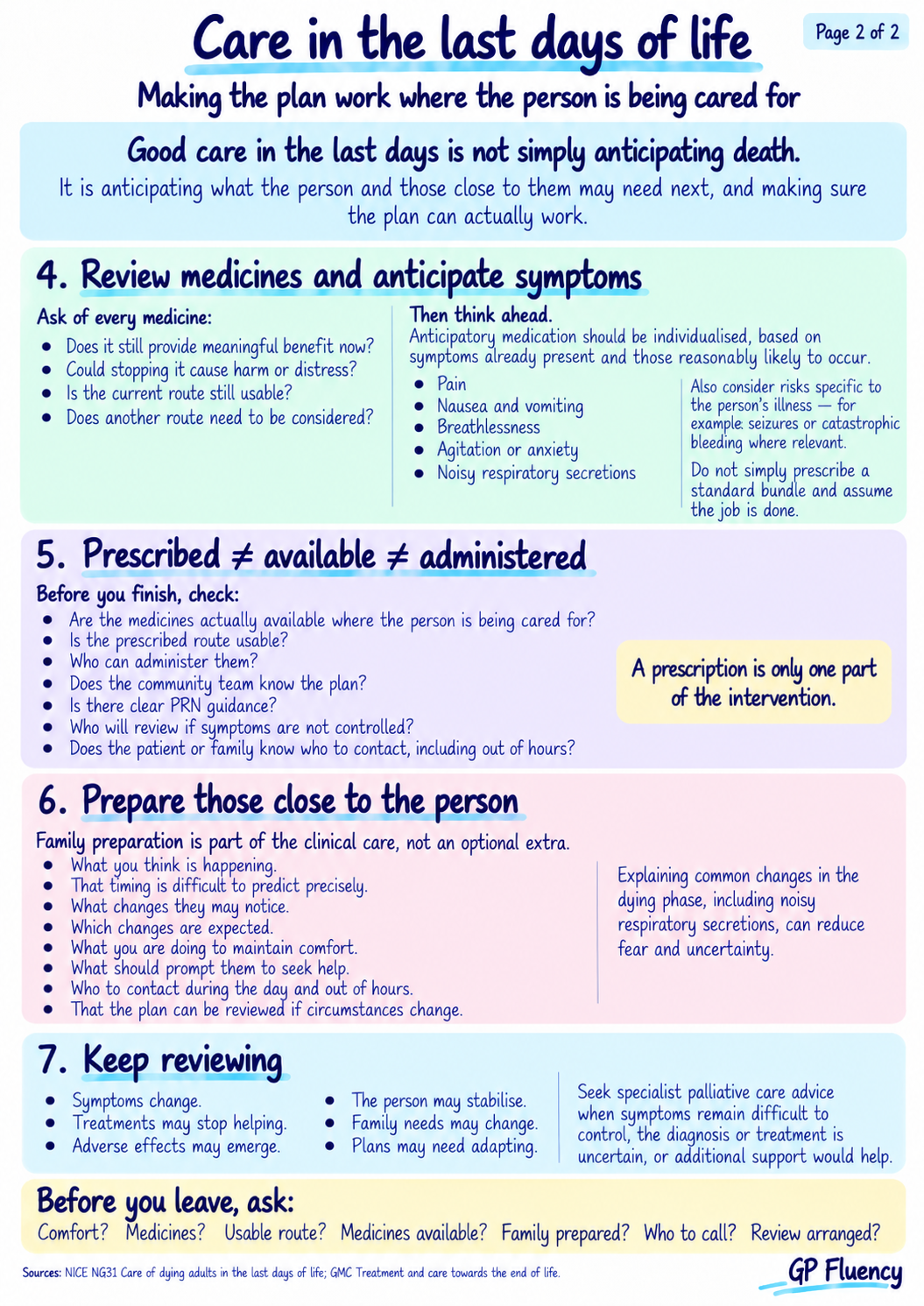
A practical guide to restlessness and agitation, respiratory secretions, hydration, reviewing medicines, anticipatory prescribing, preparing the patient’s loved ones and ensuring the plan can be delivered where the person is being cared for.
When to seek further help
Much palliative care can be managed well within general practice and community teams.
Specialist palliative care can add valuable expertise when symptoms, decisions or support needs become more complex.
Consider seeking further advice or support when:
Symptoms remain difficult to control despite appropriate first-line management.
There is uncertainty about opioid choice, conversion, toxicity or prescribing in significant renal or hepatic impairment.
Pain, nausea, breathlessness, agitation or other symptoms are complex, rapidly changing or refractory.
You are uncertain whether deterioration represents a reversible problem, progression of illness or the last days of life and this uncertainty is affecting management.
Advance care planning, treatment decisions or family disagreement are particularly complex.
Psychological, social or spiritual distress is significant.
The patient’s or family’s support needs are increasing beyond what the existing team can provide.
Care at home is becoming difficult to sustain or requires additional coordination.
Specialist palliative care involvement does not mean handing over care or stopping active treatment.
It can sit alongside GP care, community services and disease-directed treatment.
Where symptoms are severe, deterioration is rapid or there is concern about an acute emergency, seek the appropriate urgent clinical support rather than waiting for routine specialist review.